Before & After Gallery
Real air ducts. Real results.
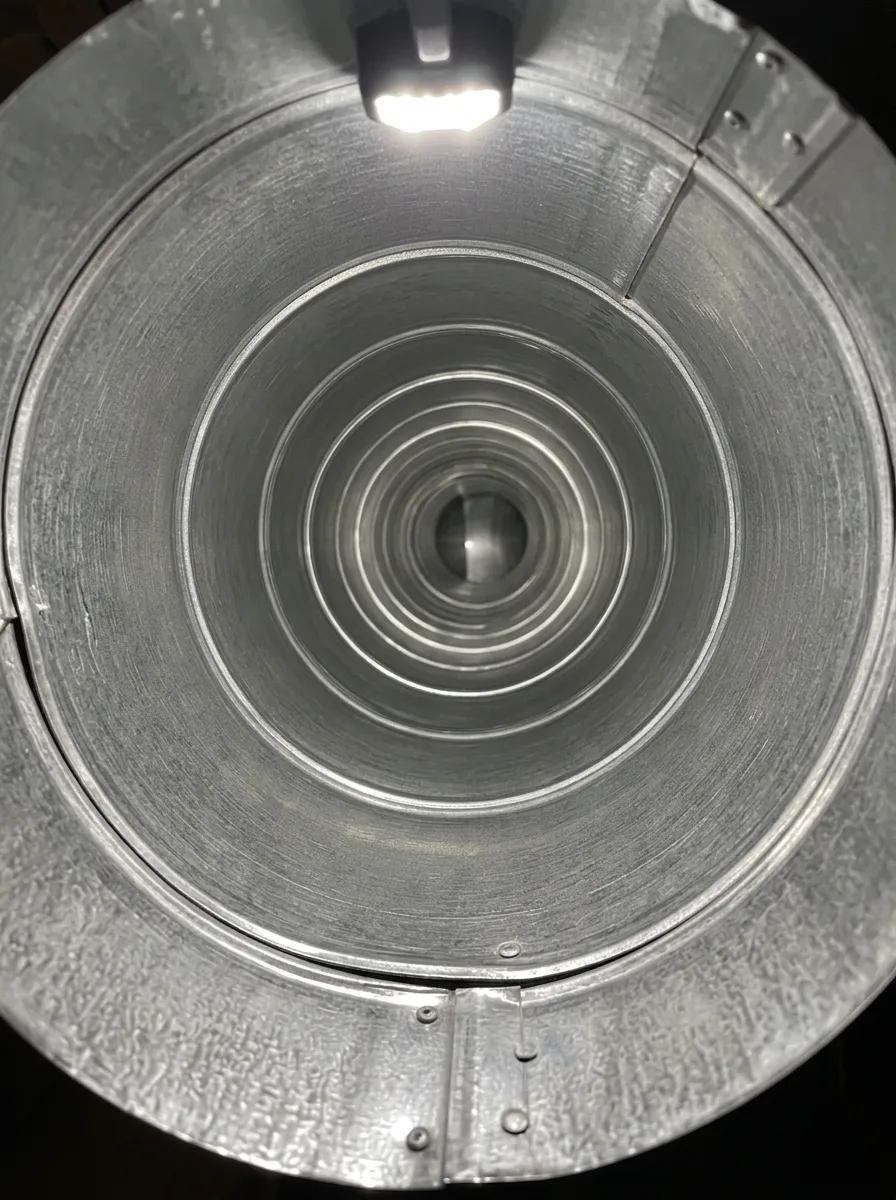
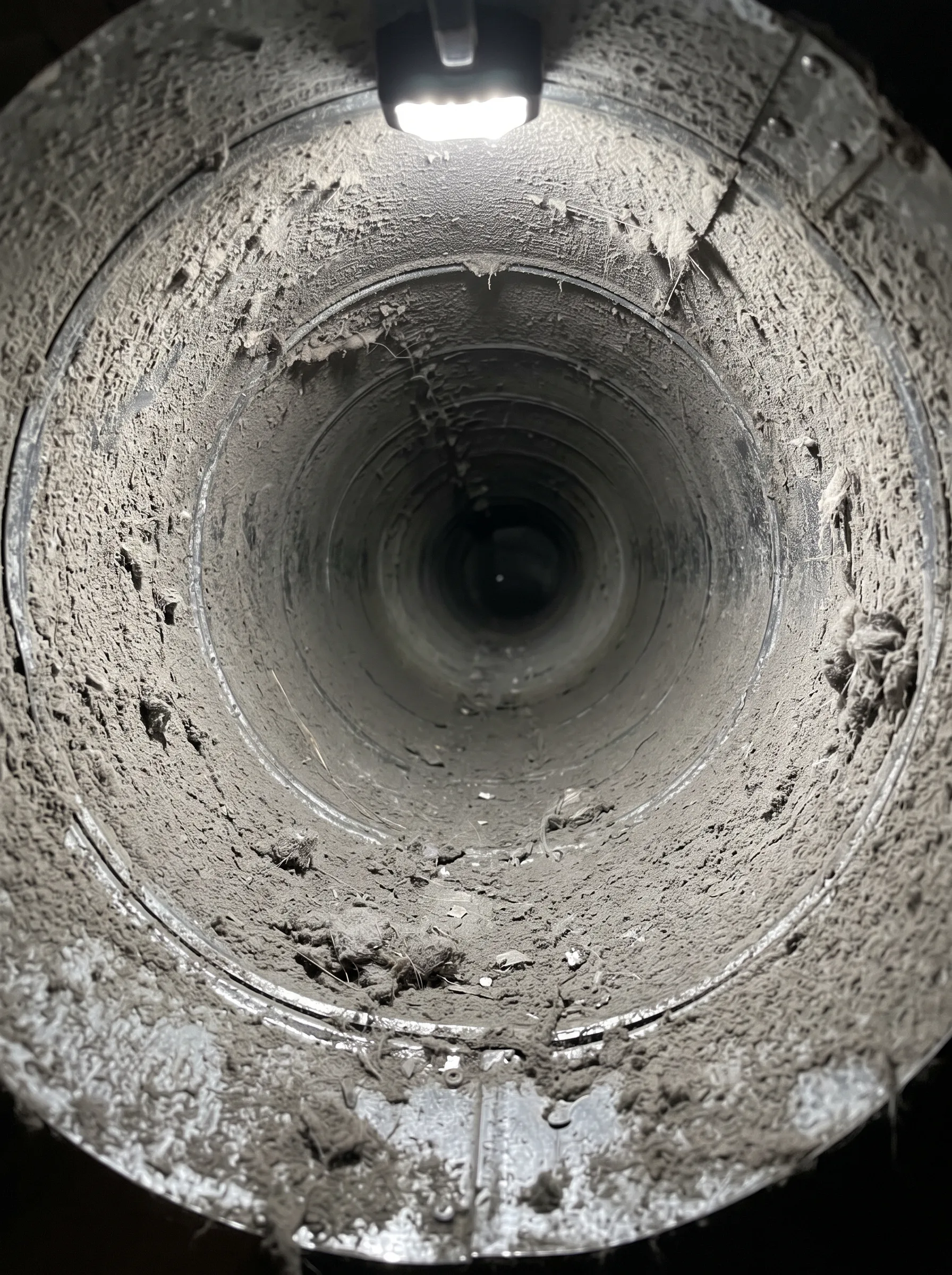
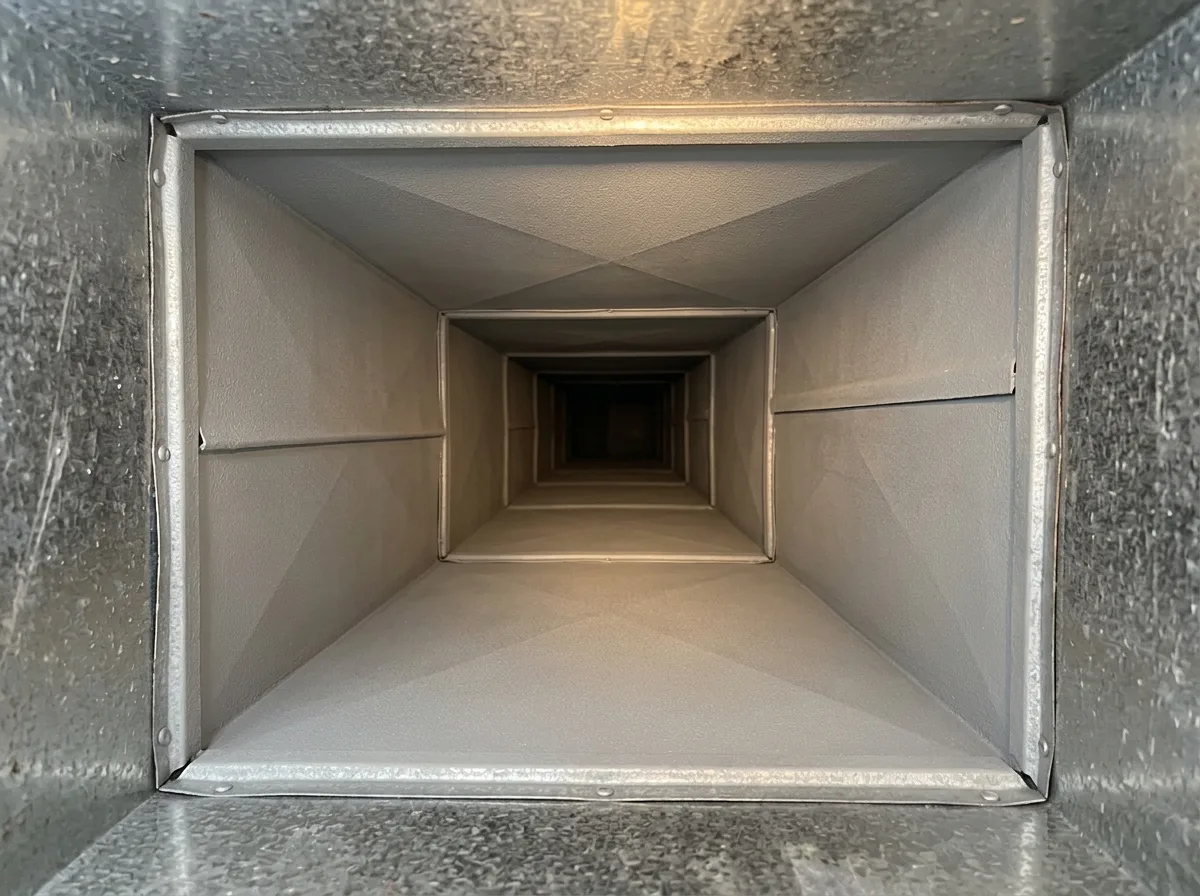
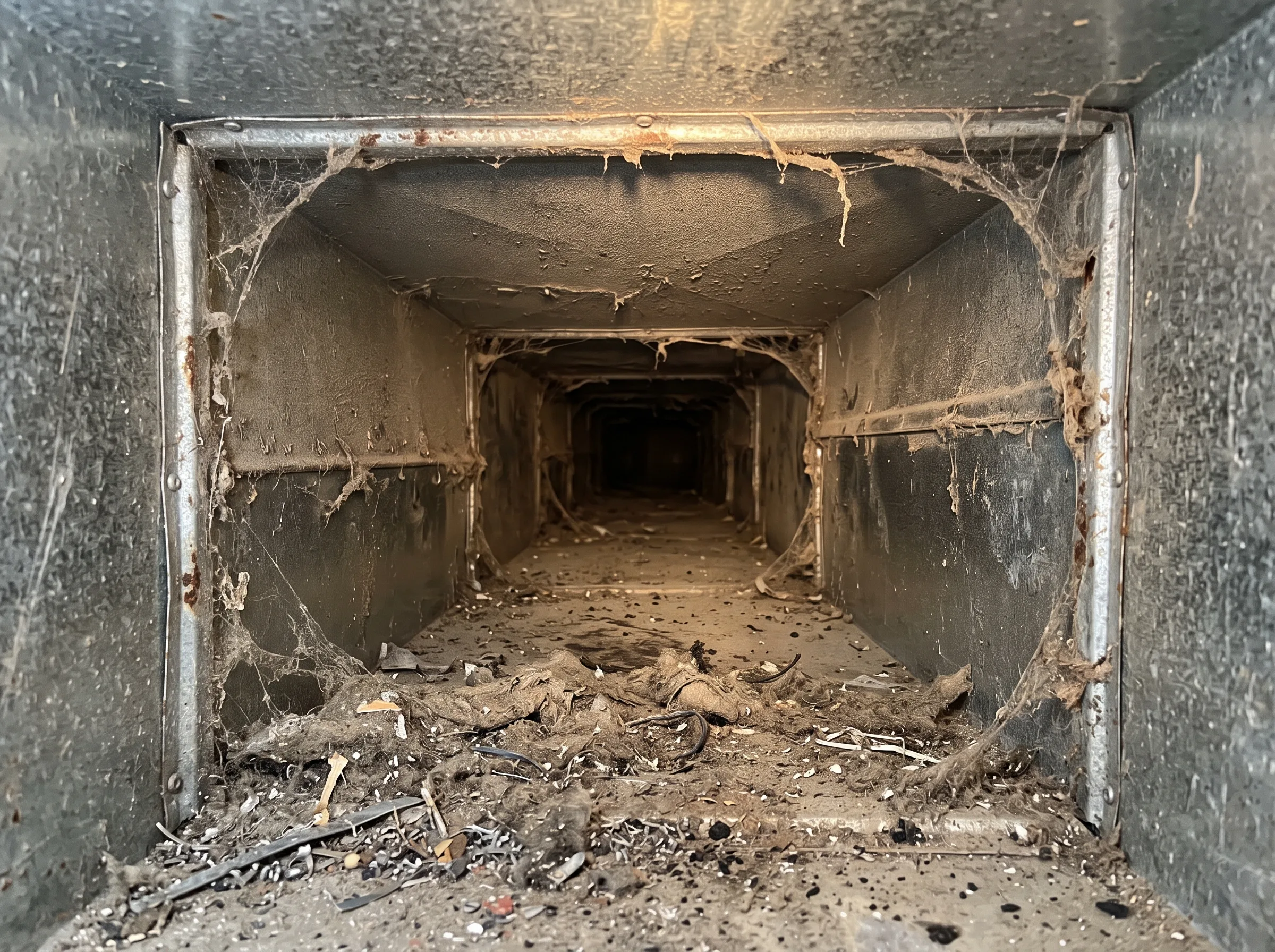
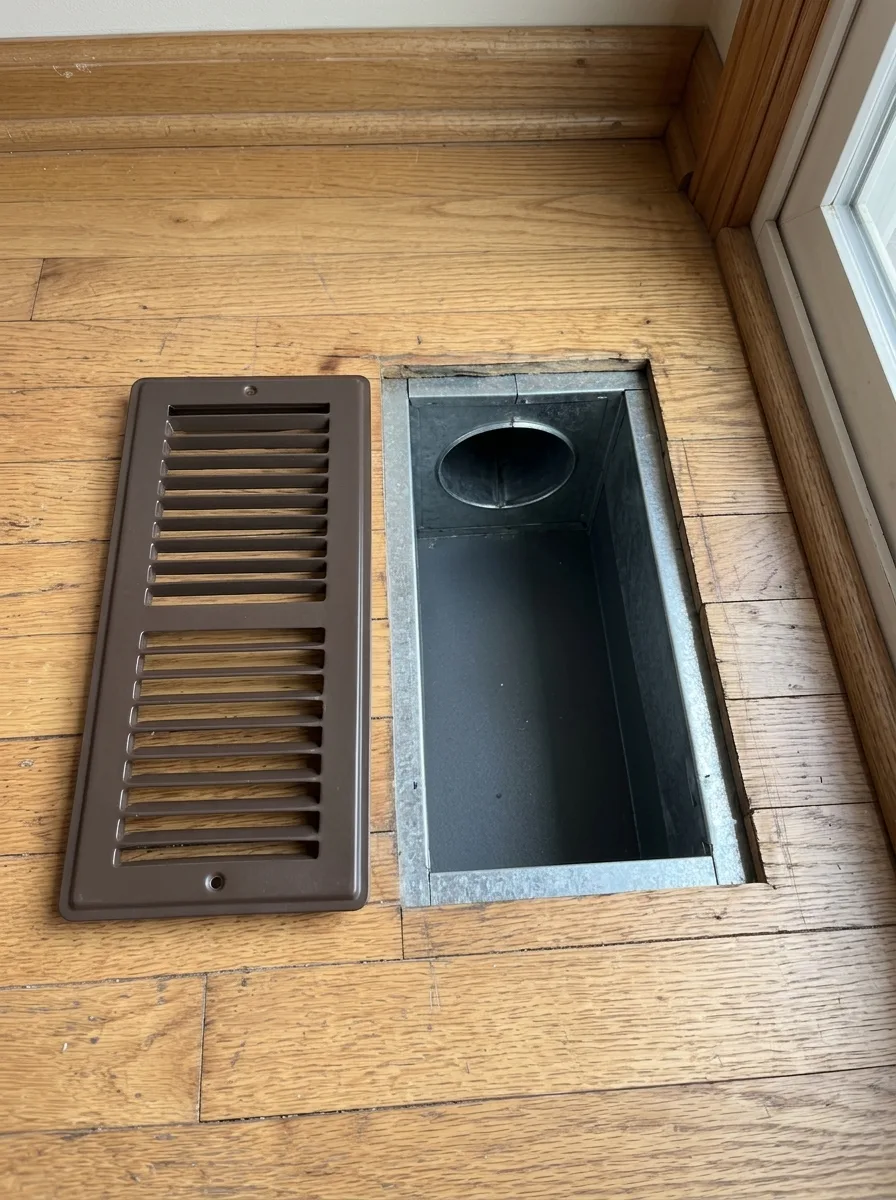
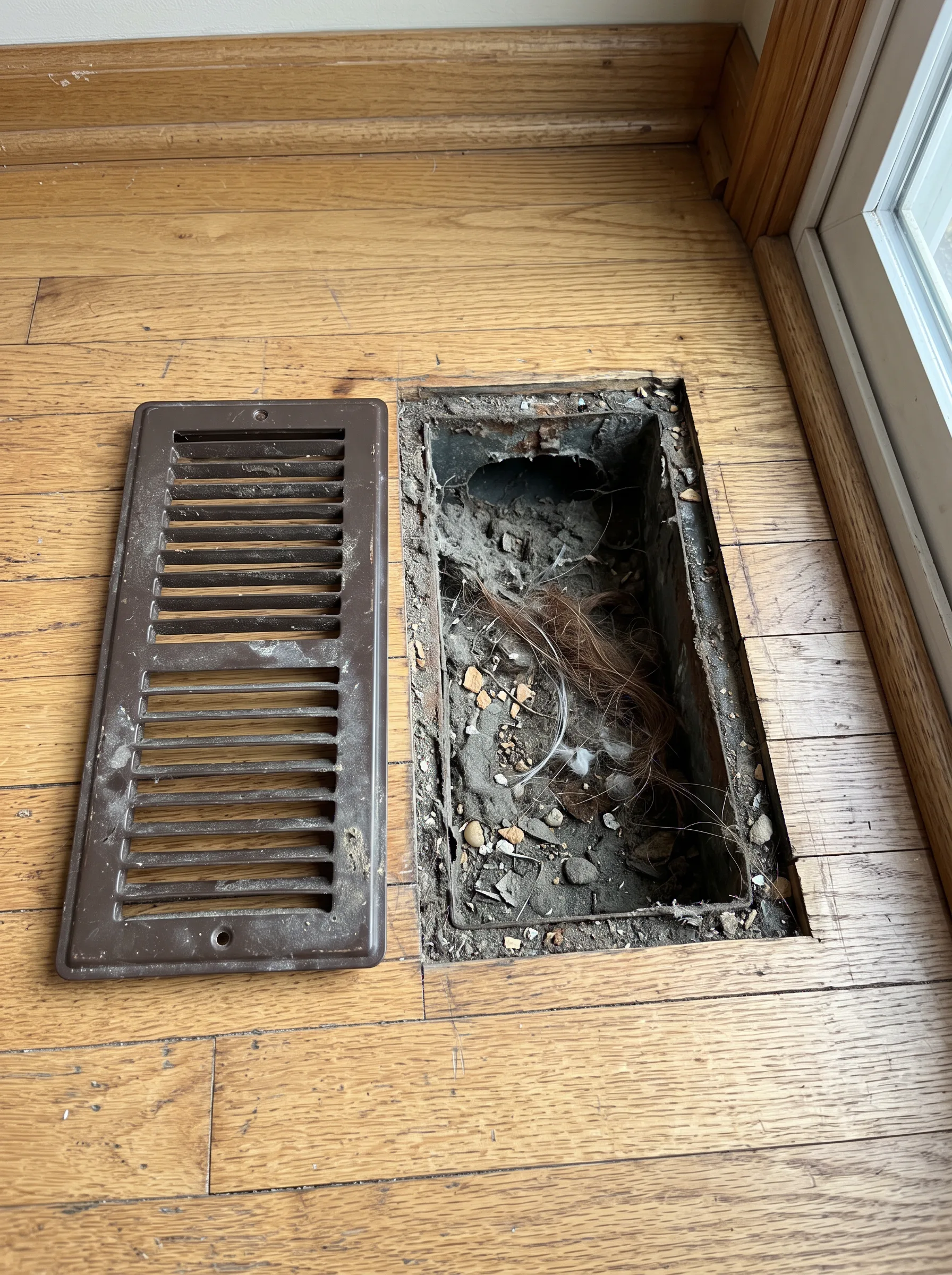
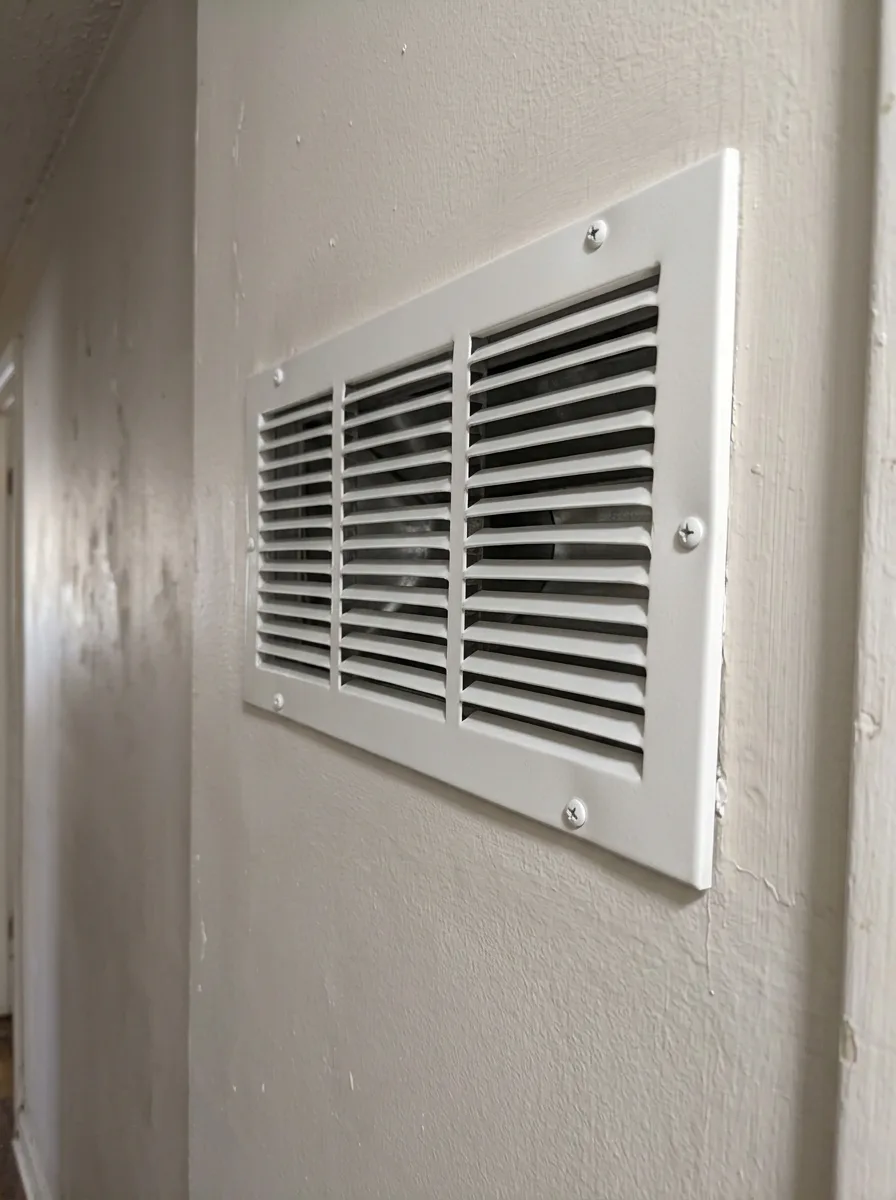
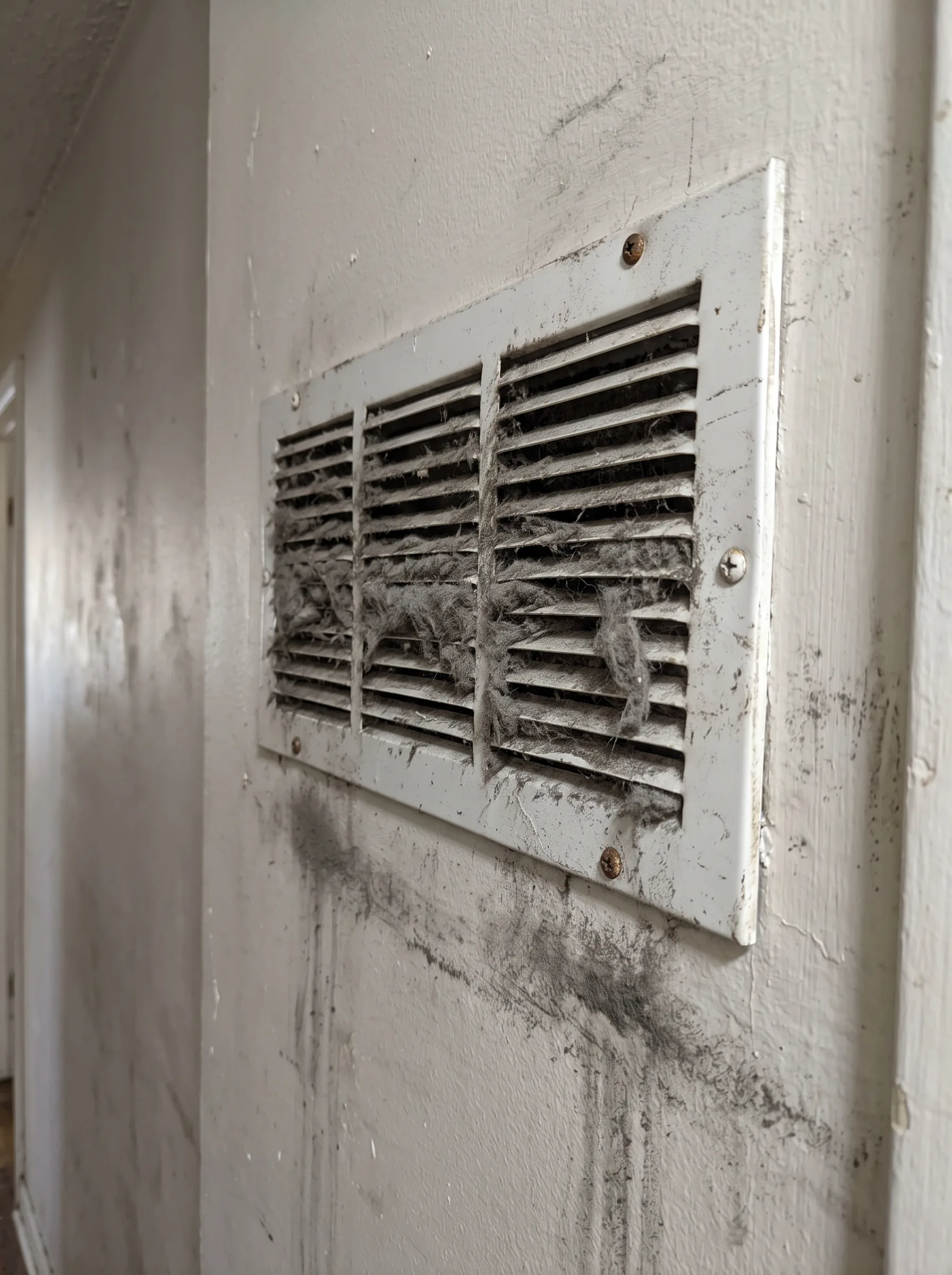
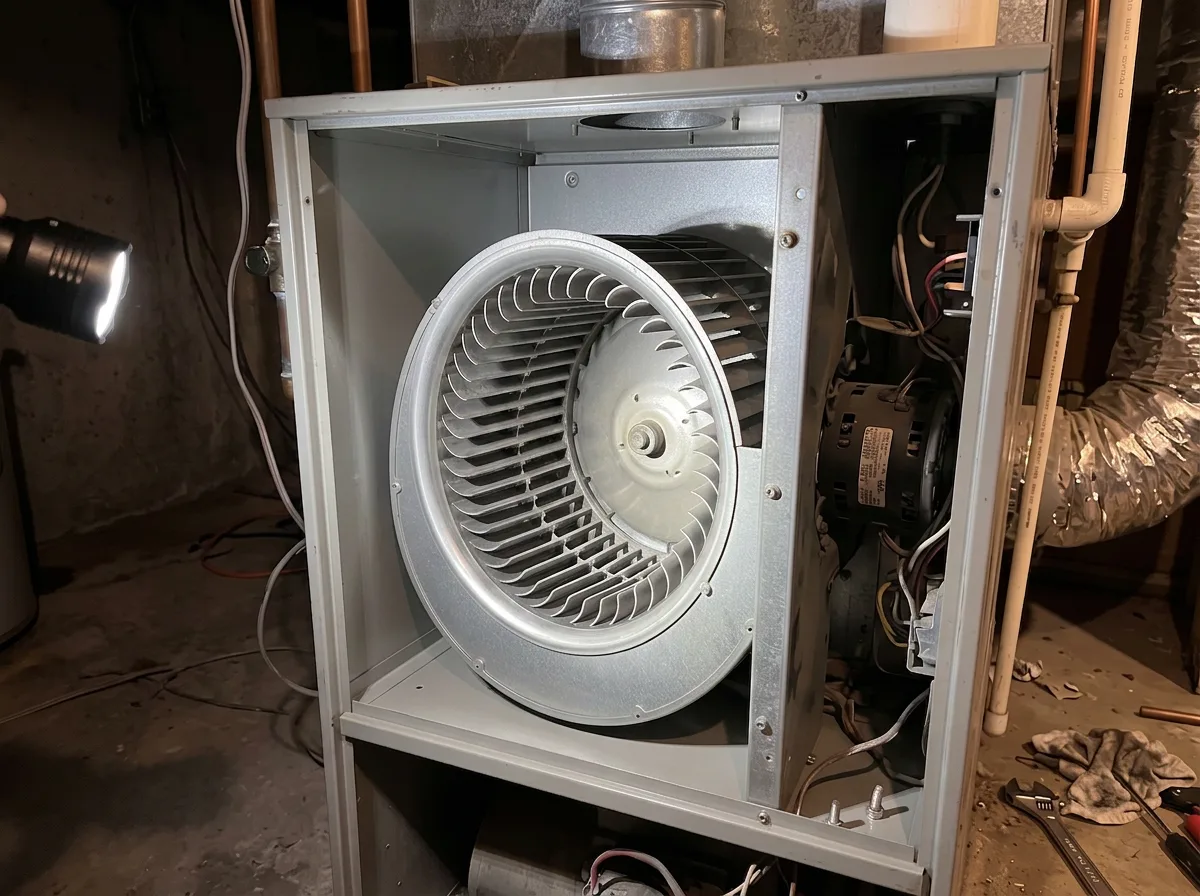
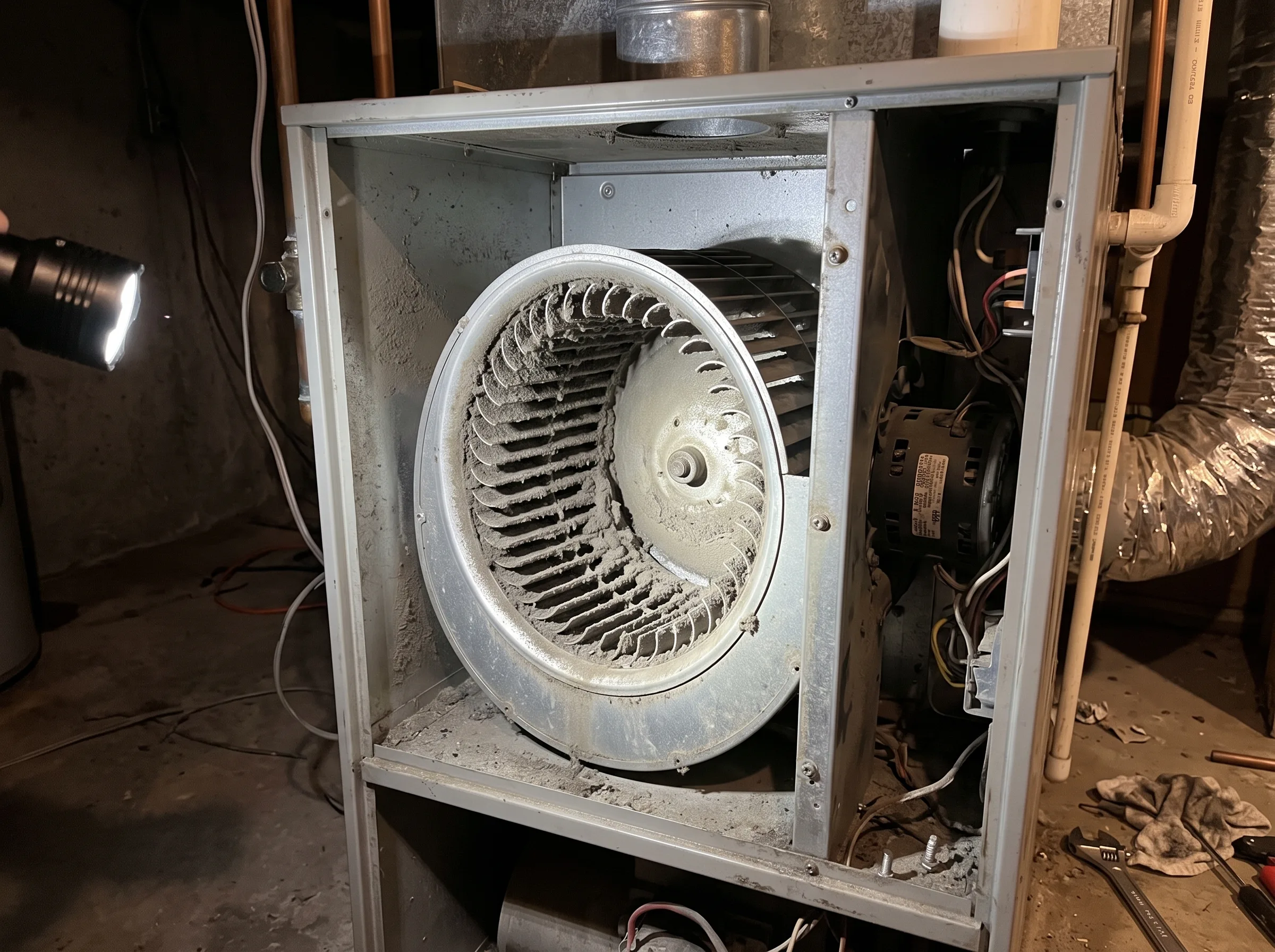
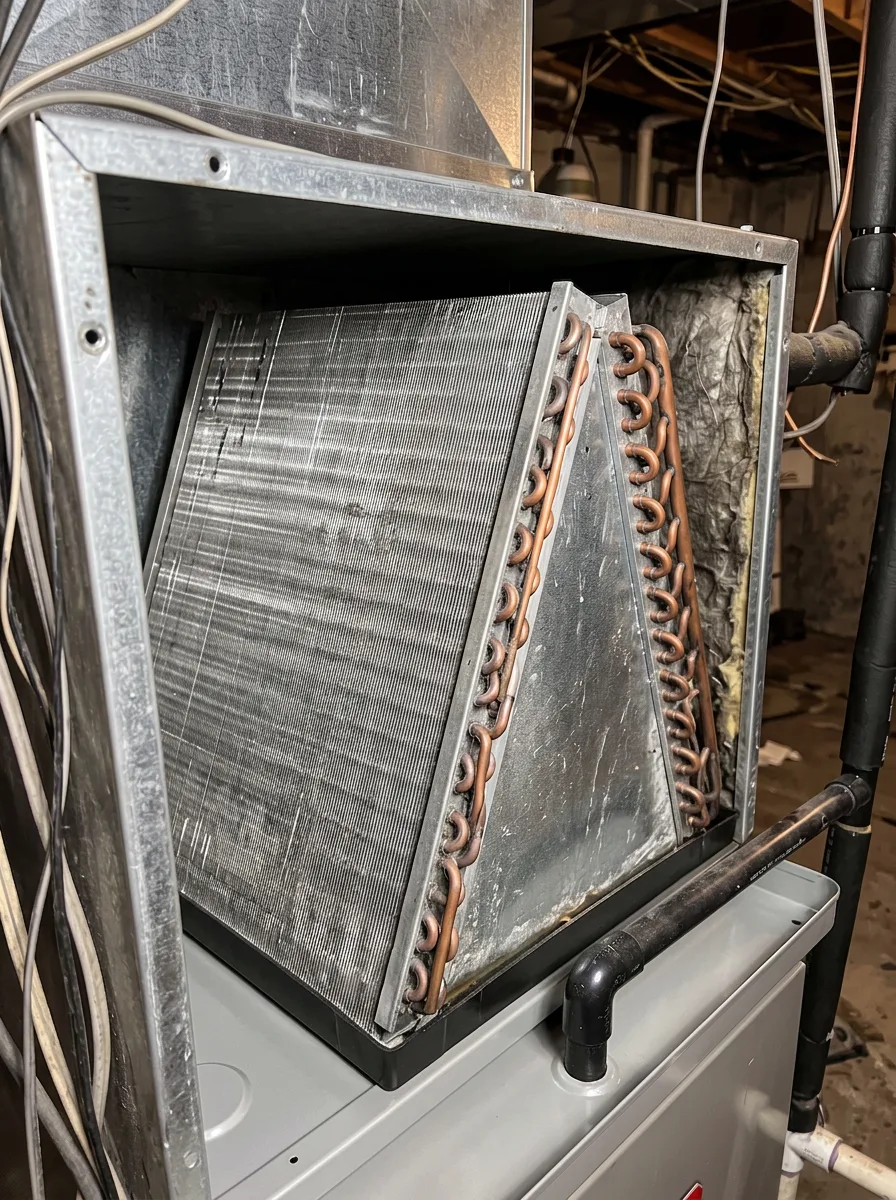
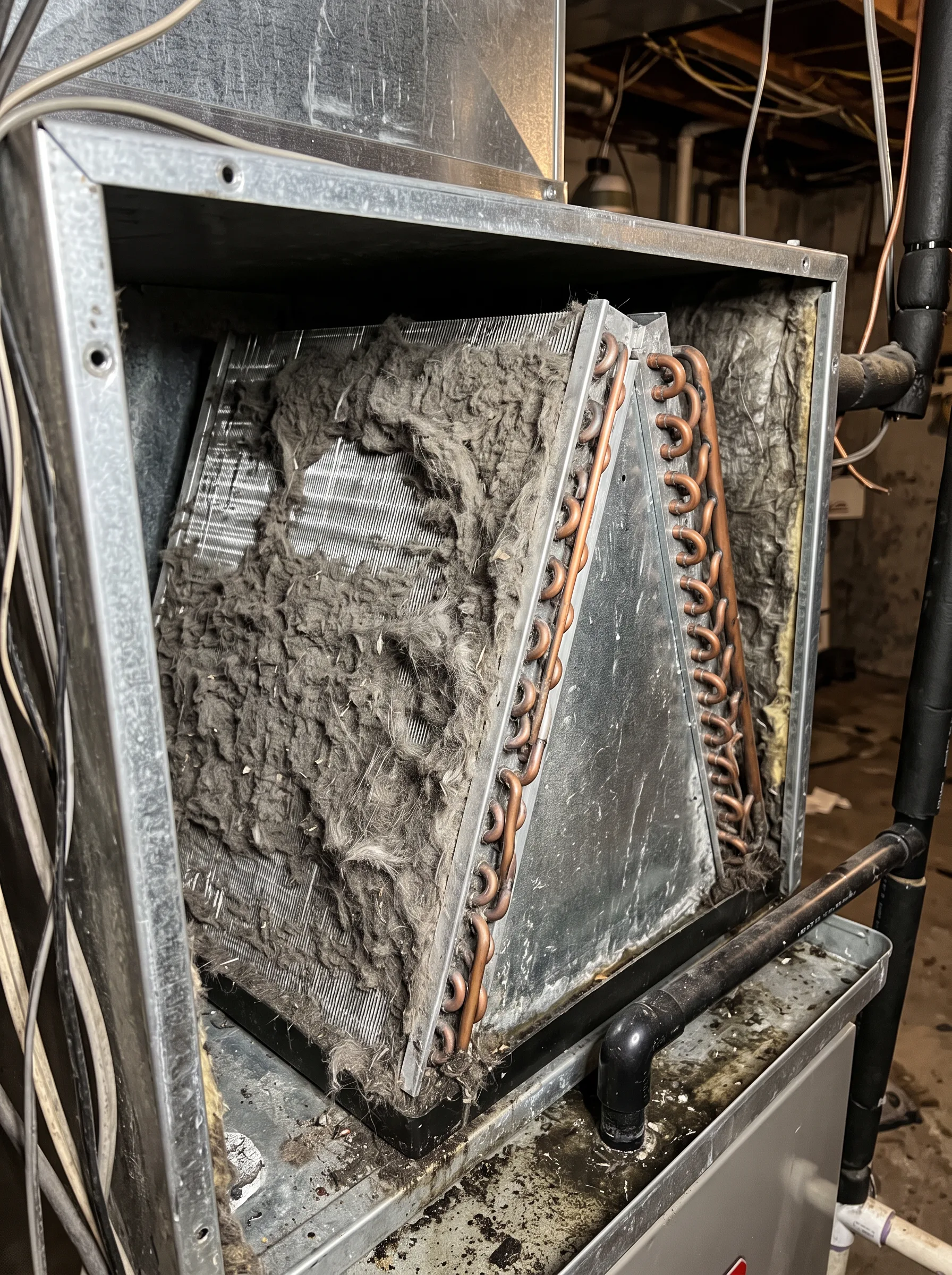
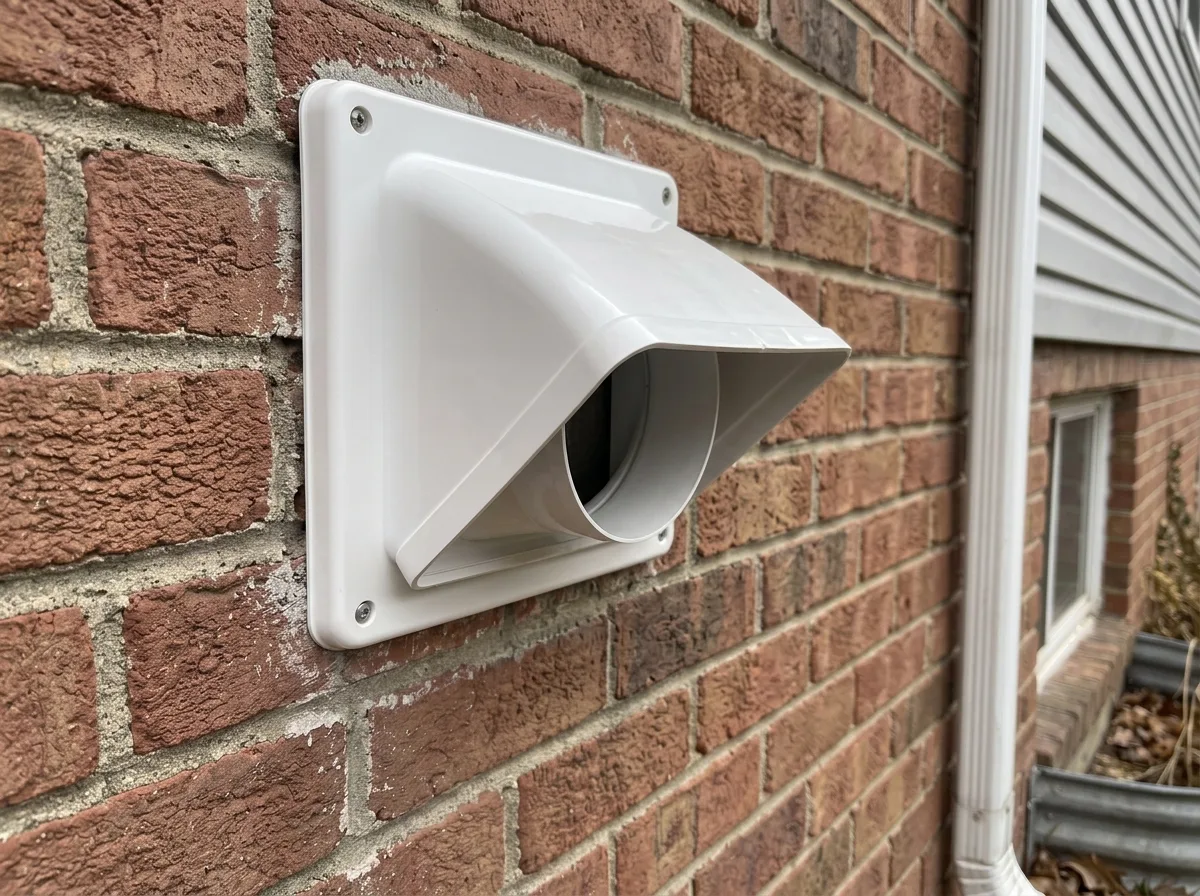
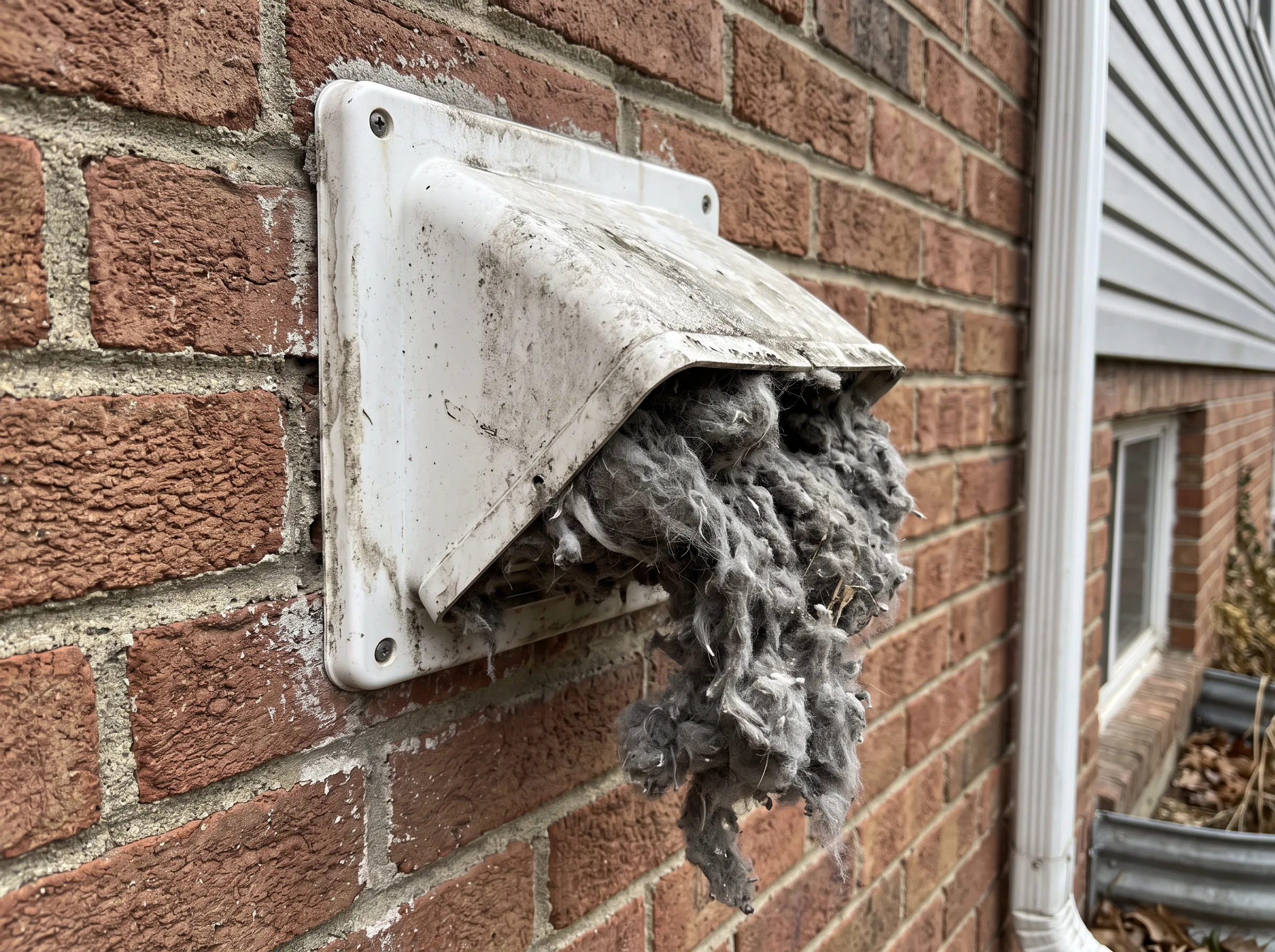
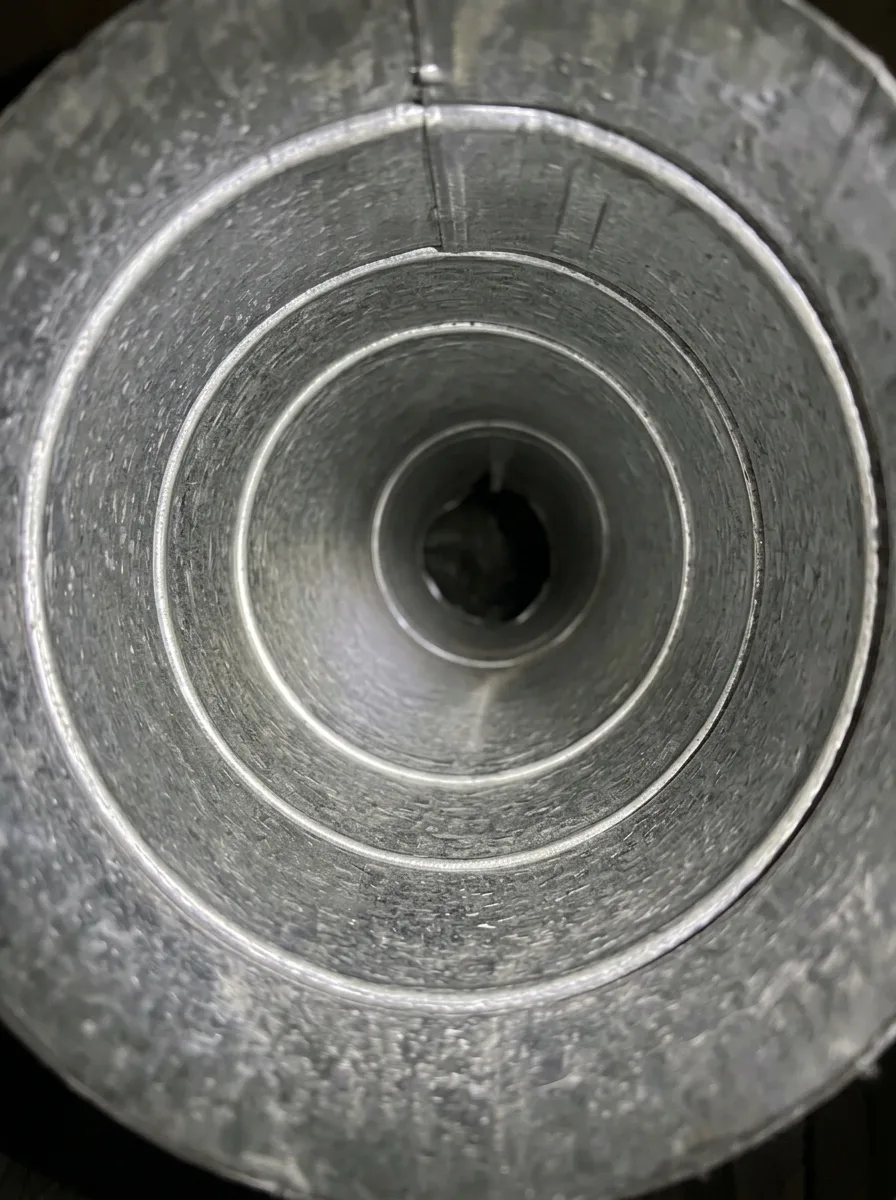
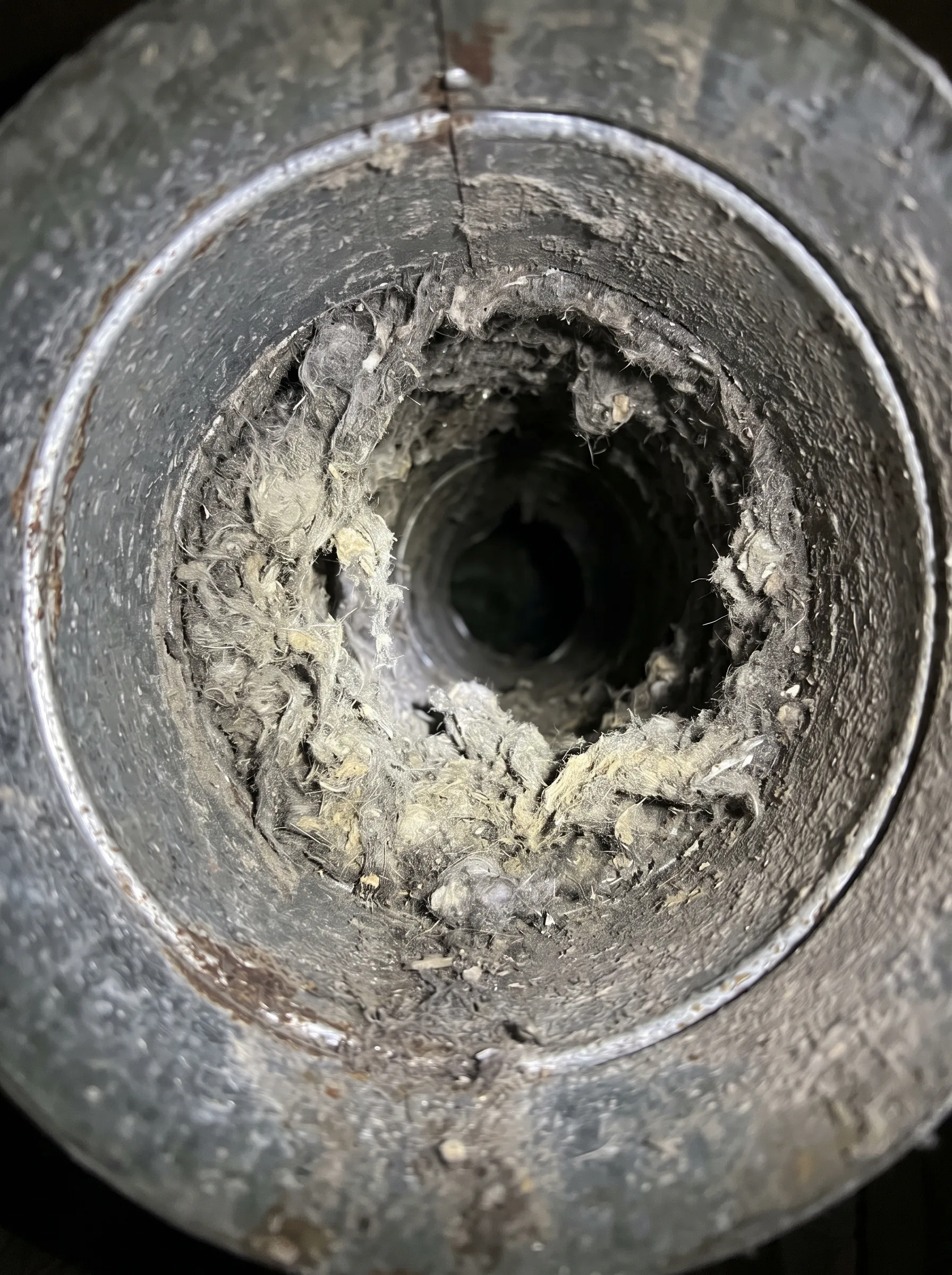
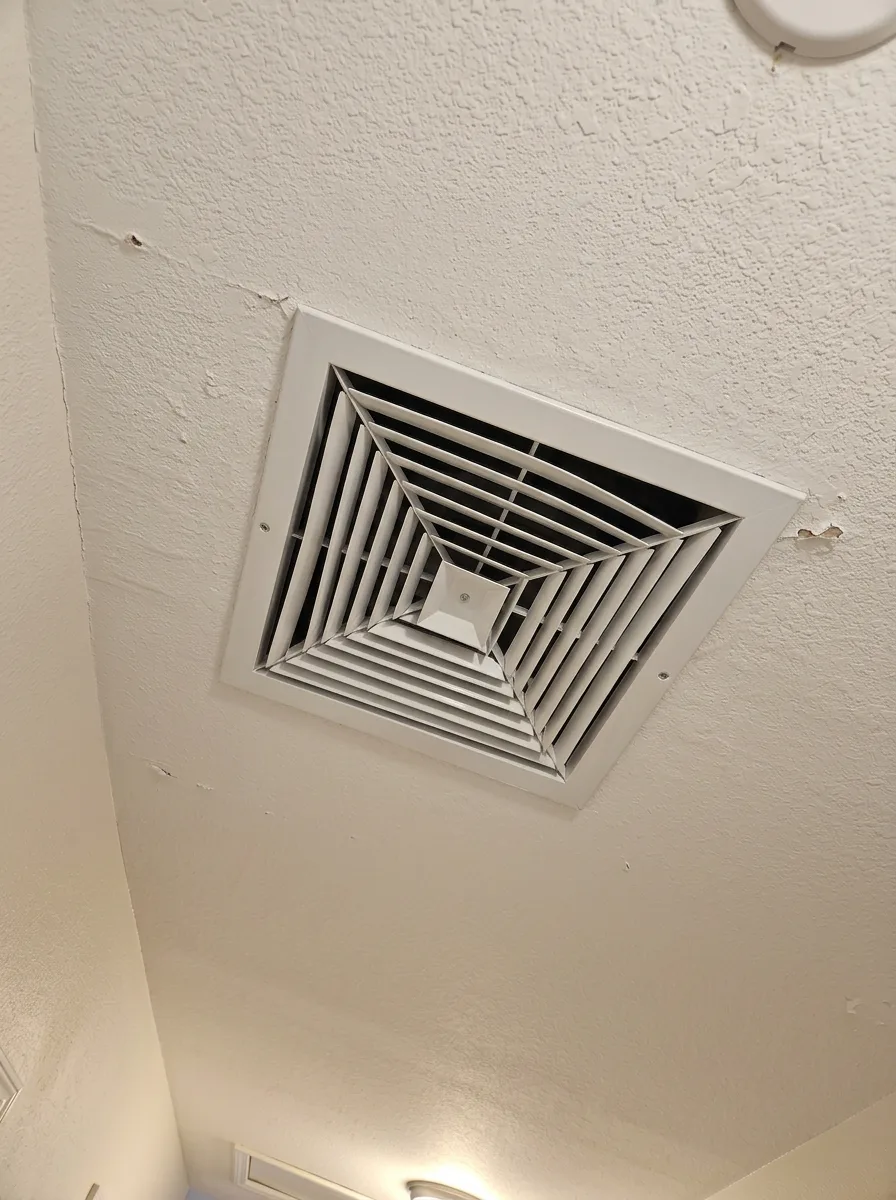
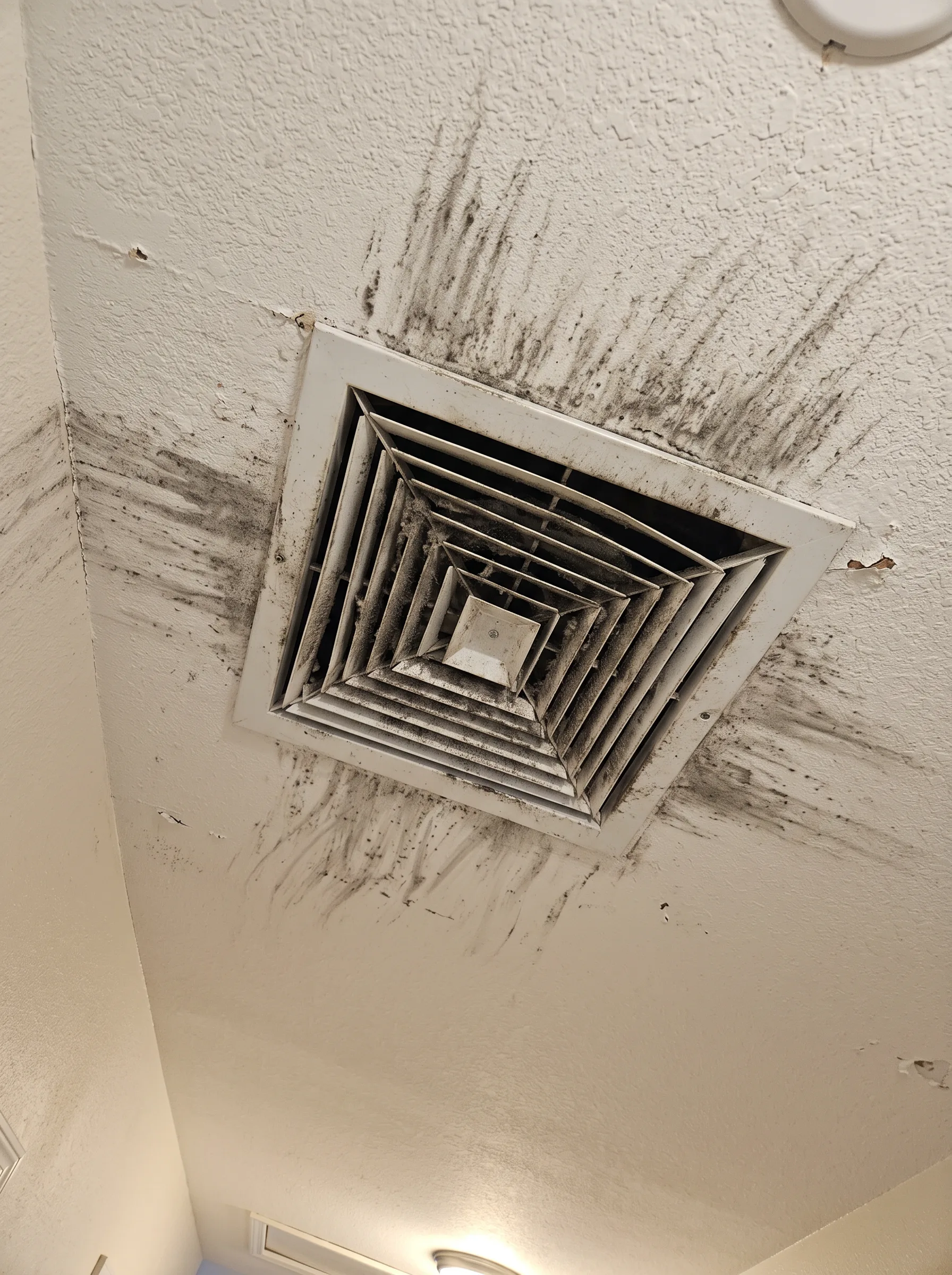
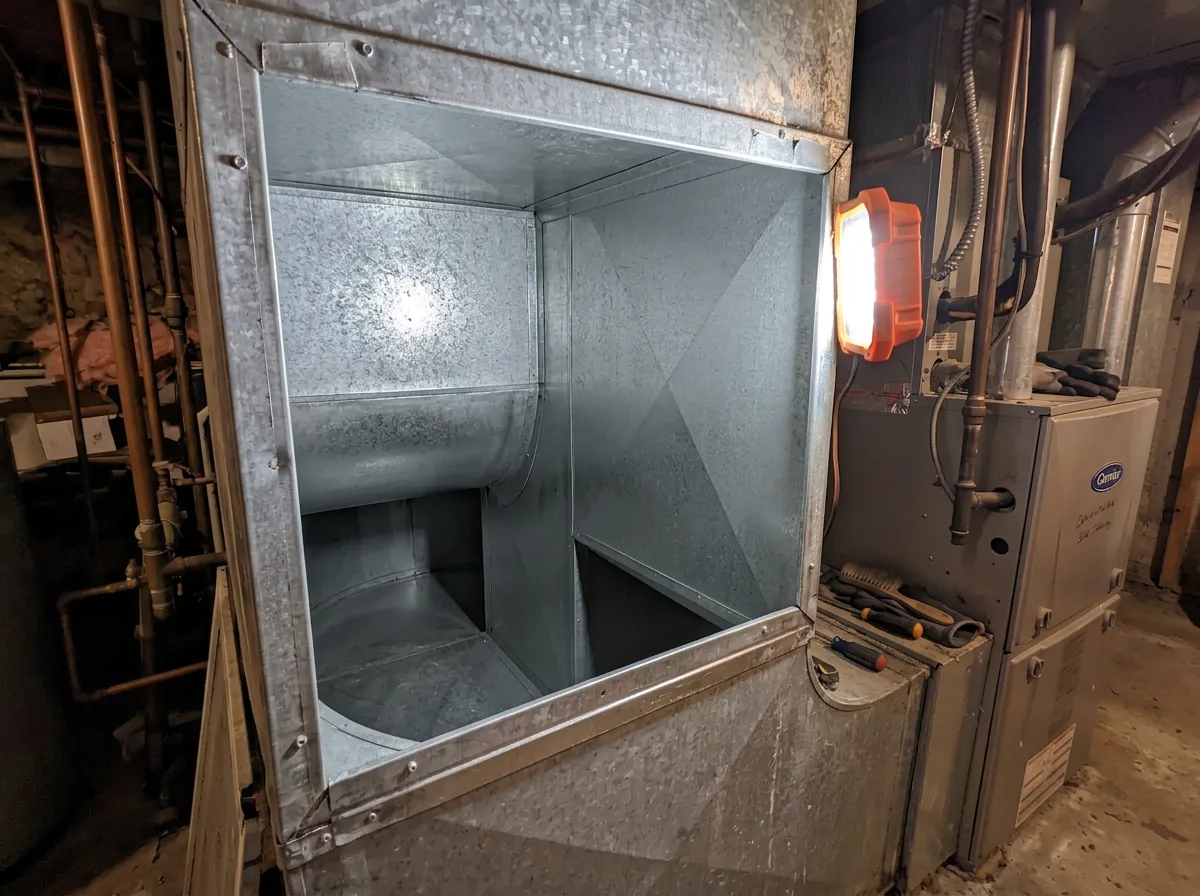
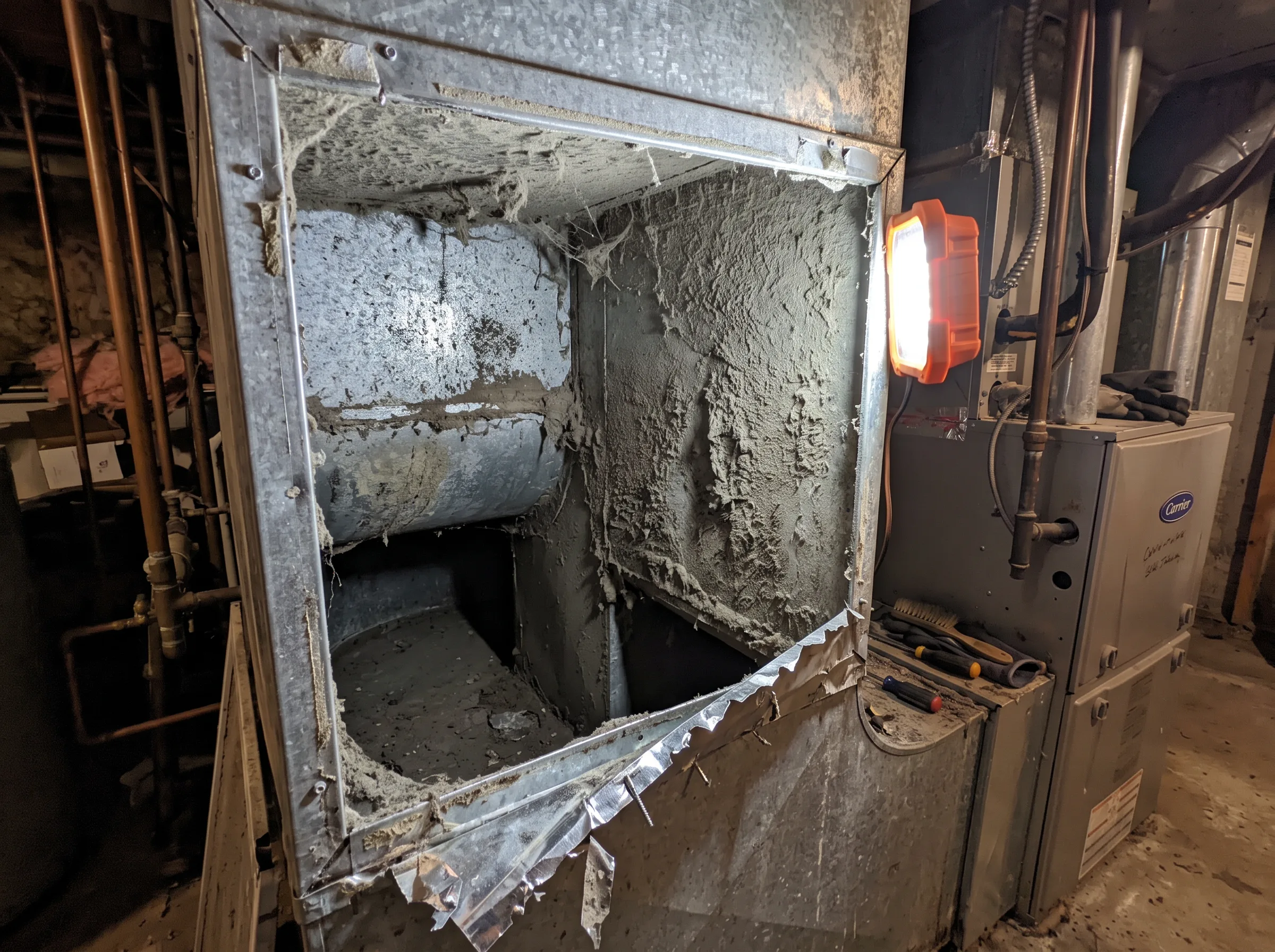
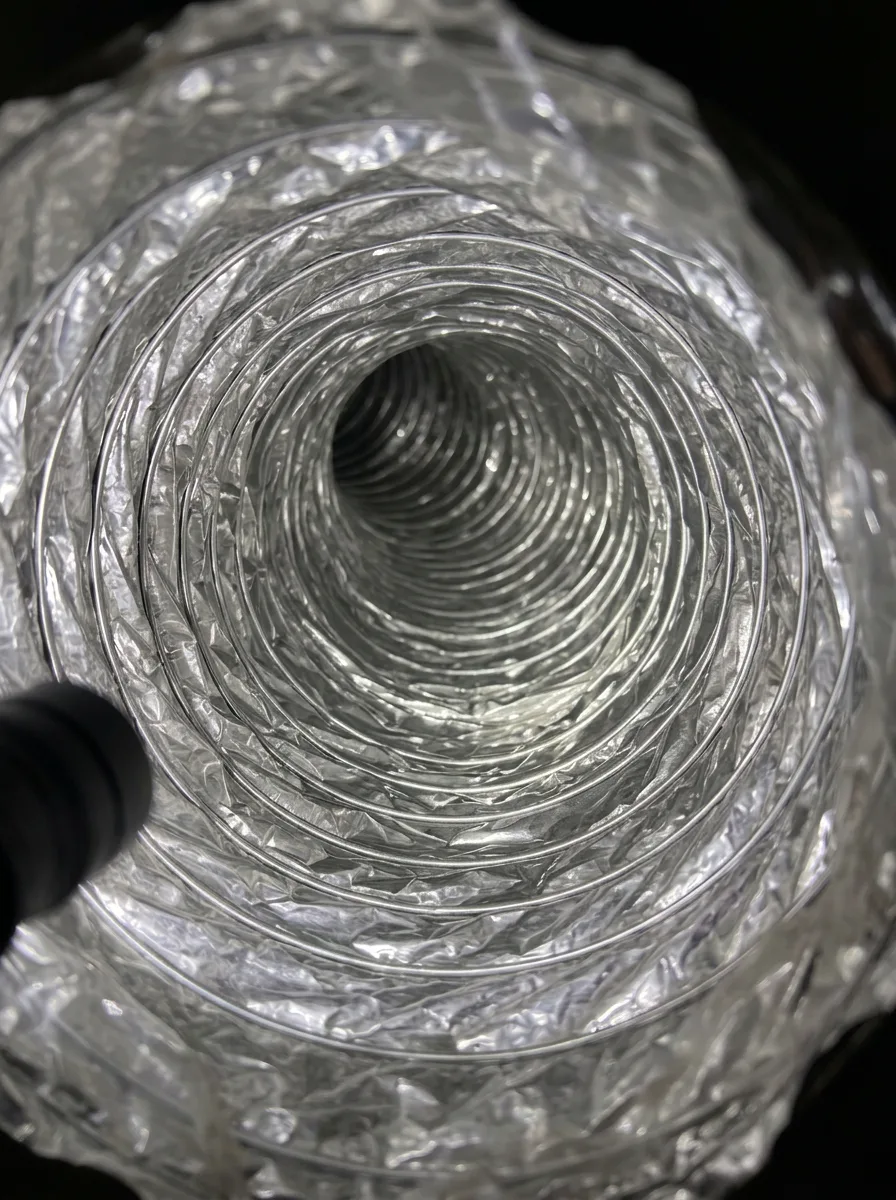
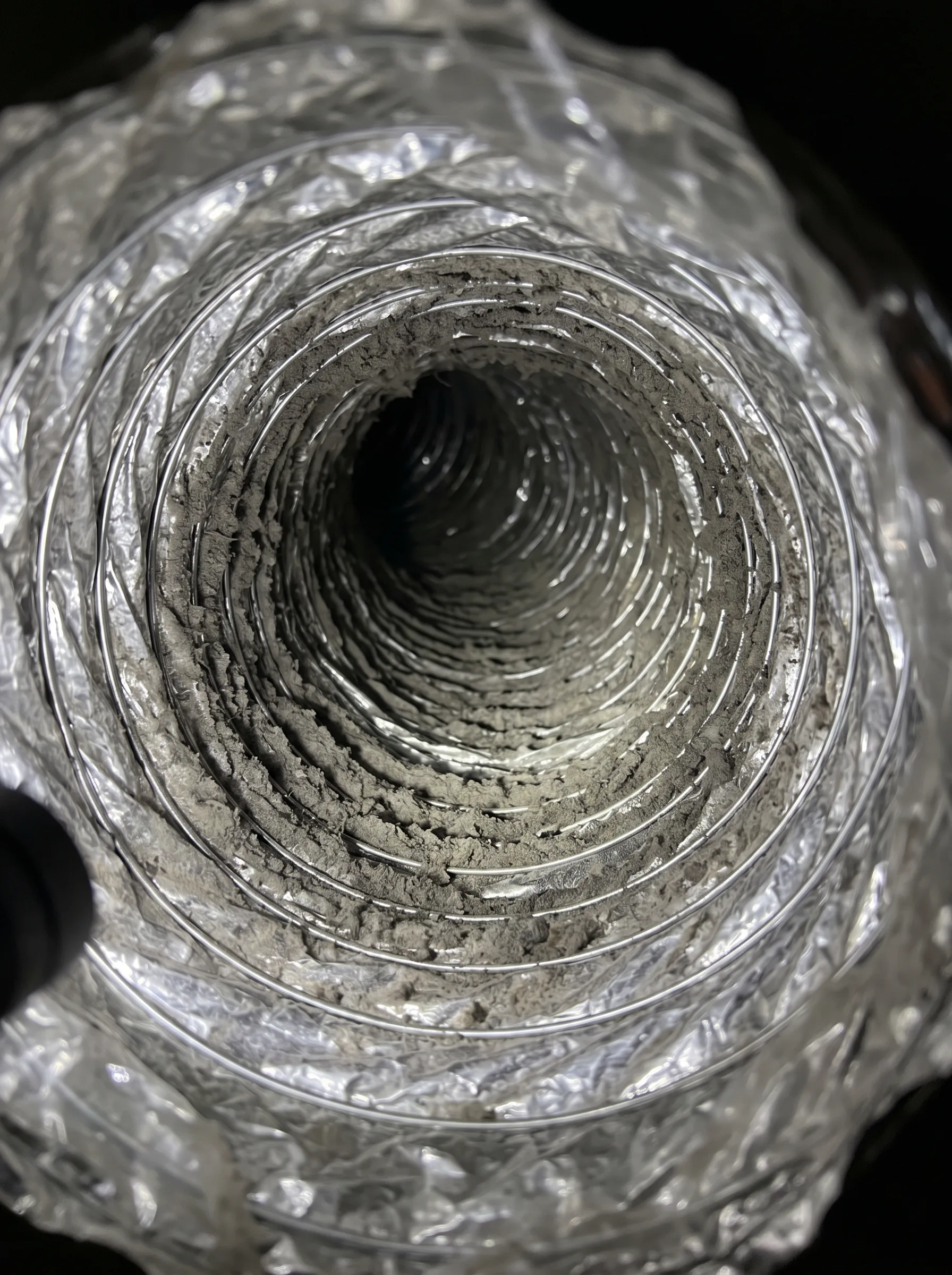
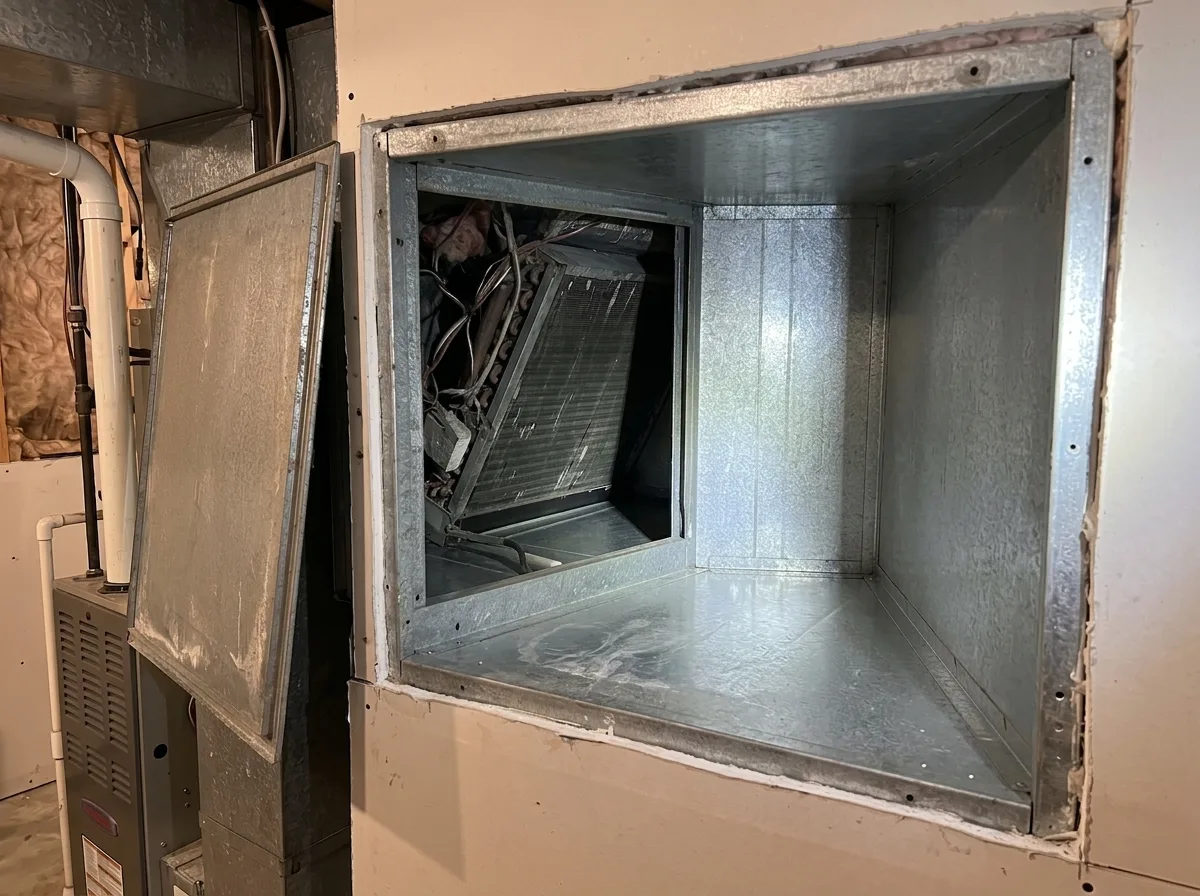
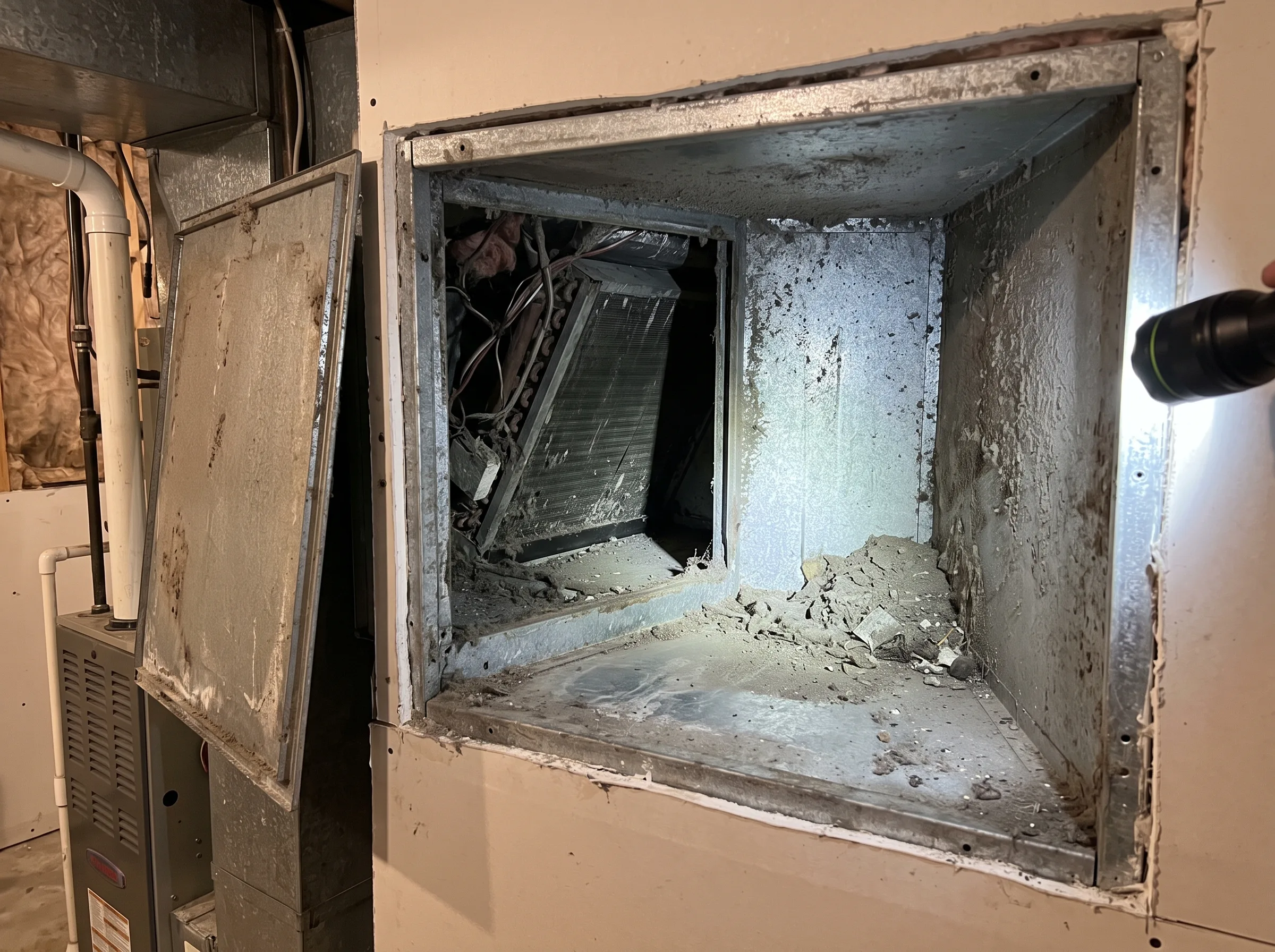
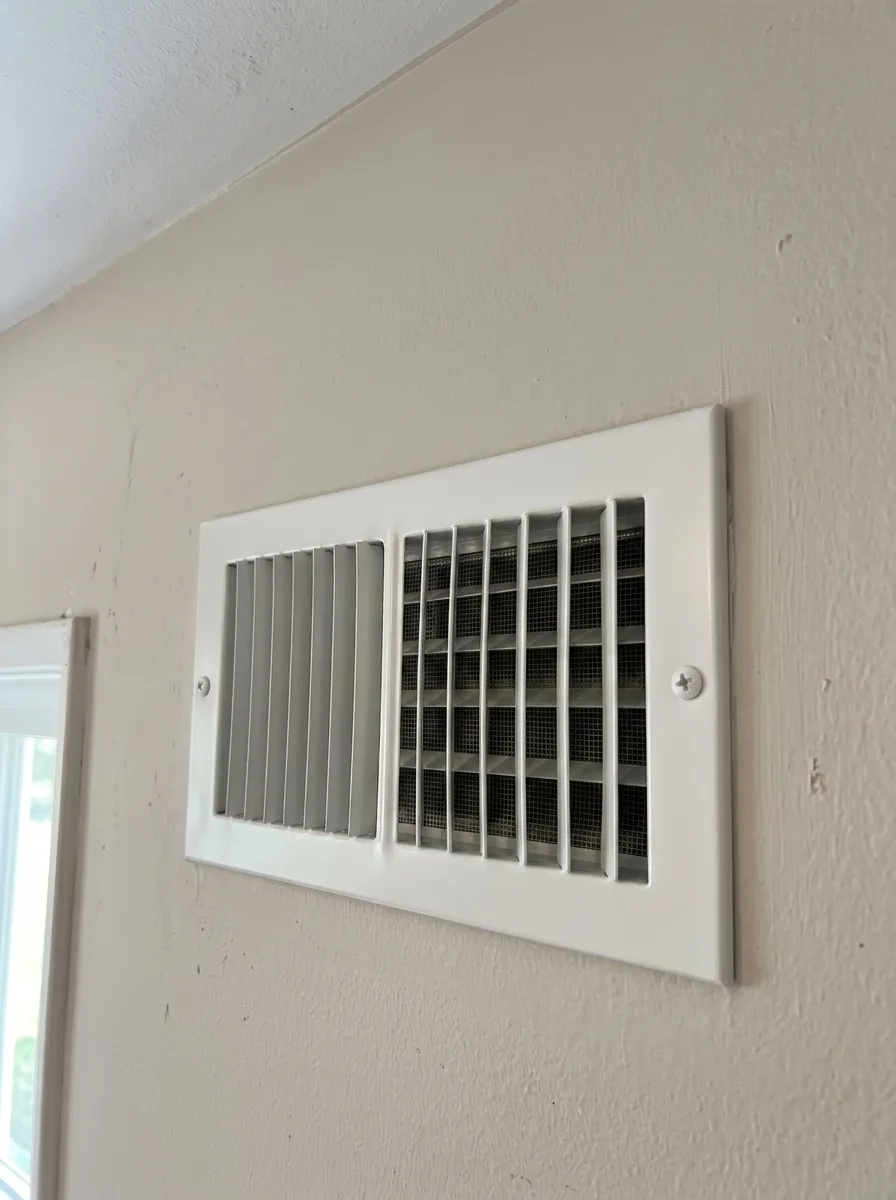
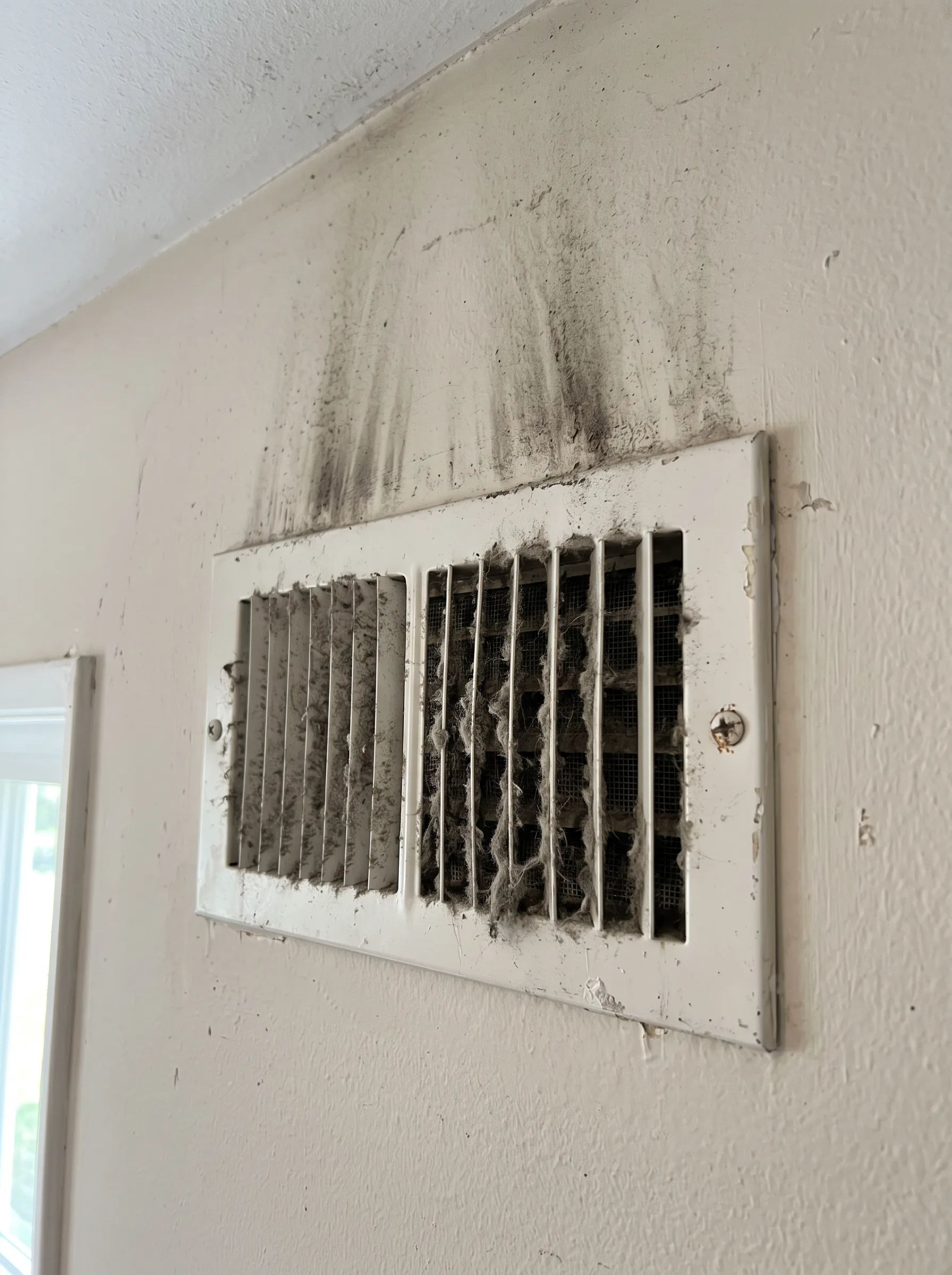
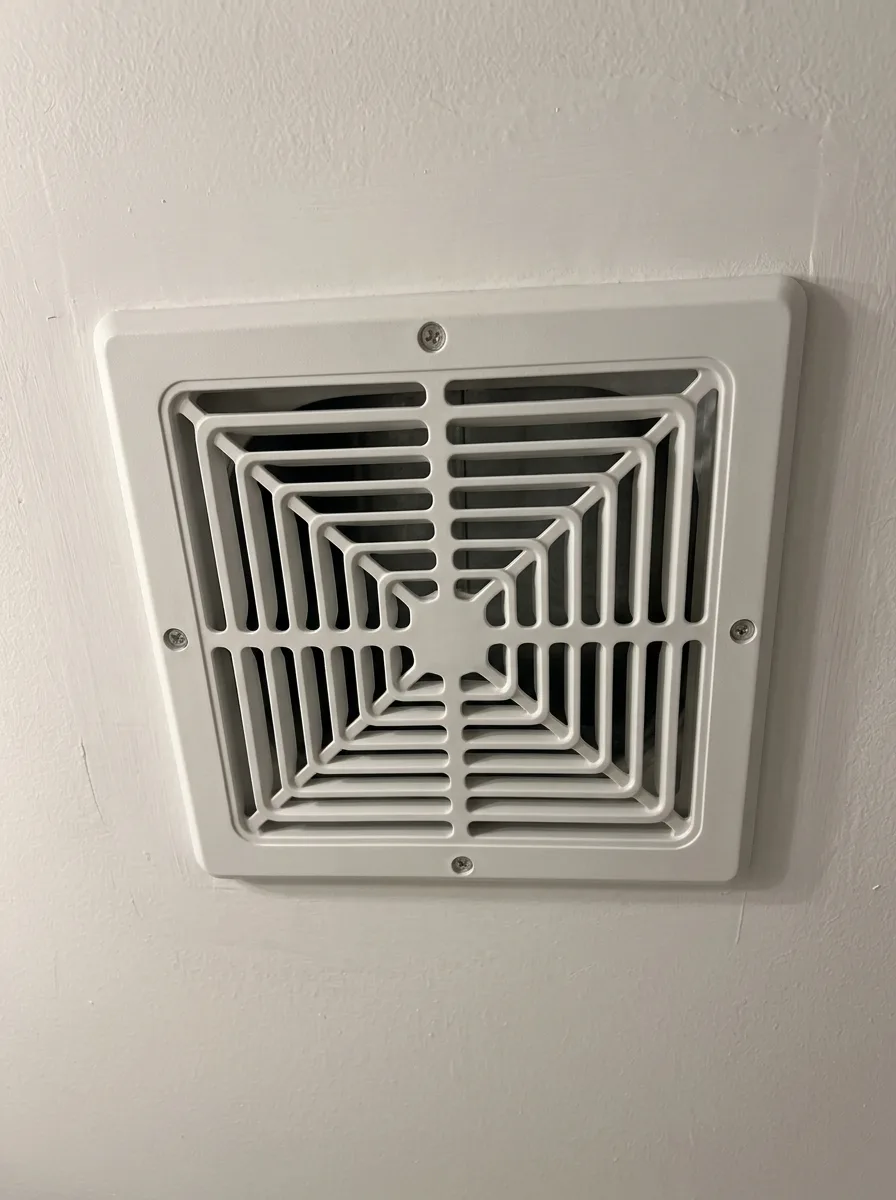
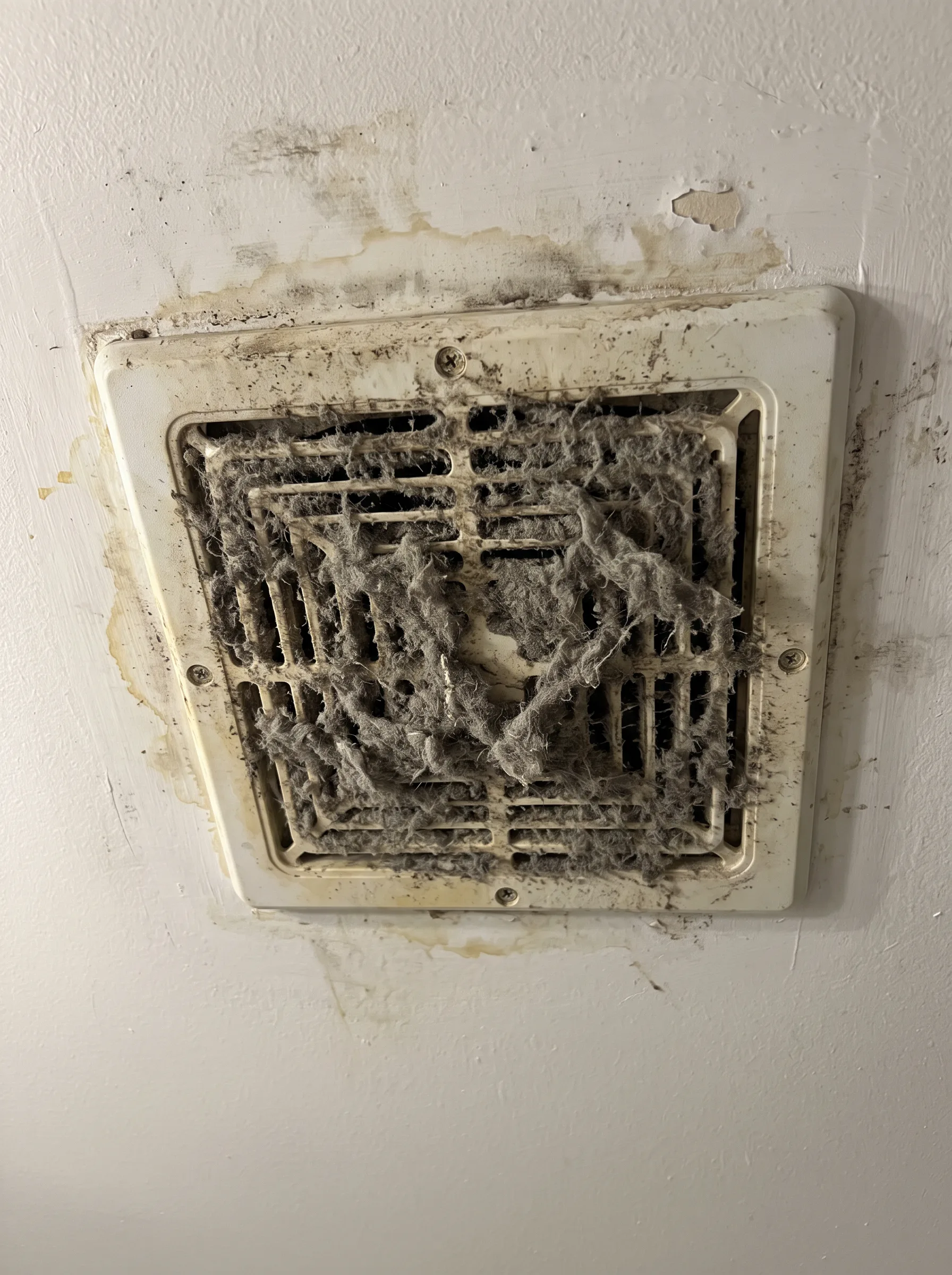
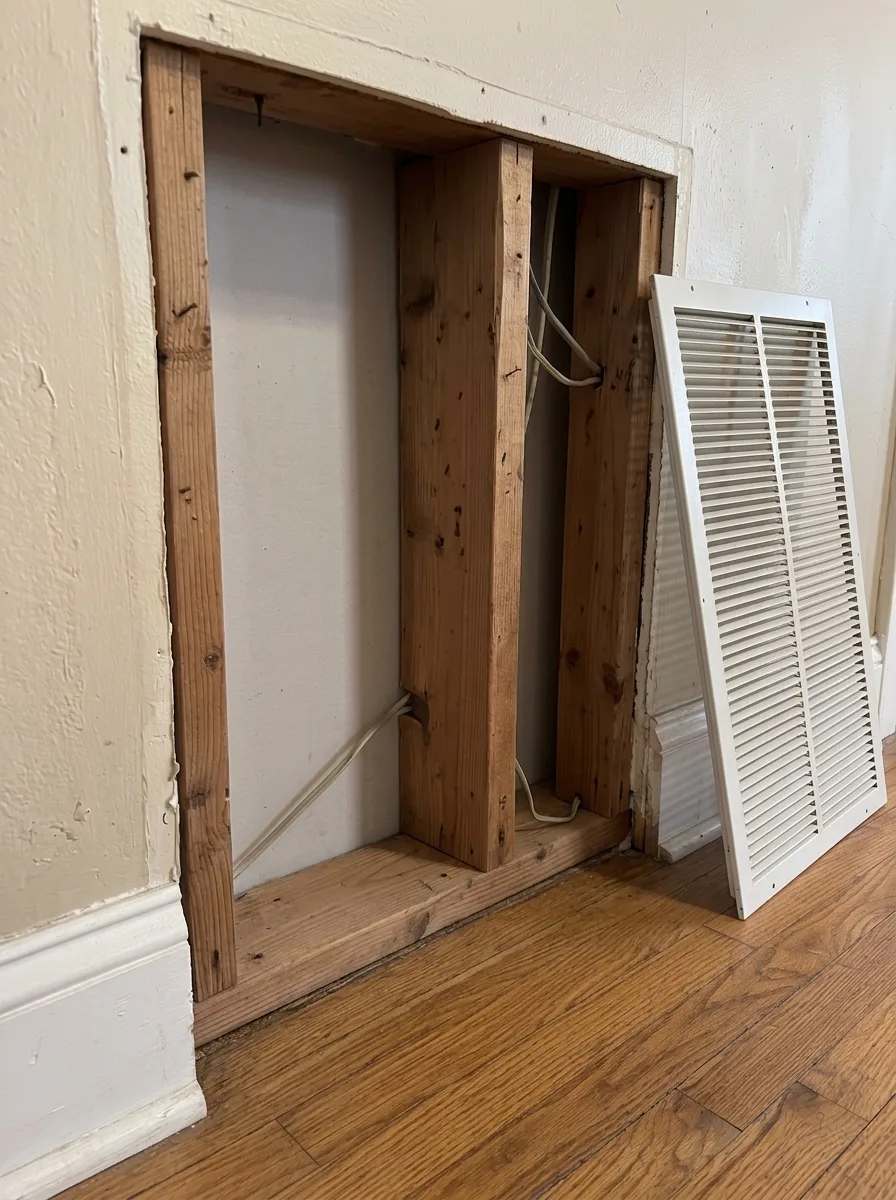
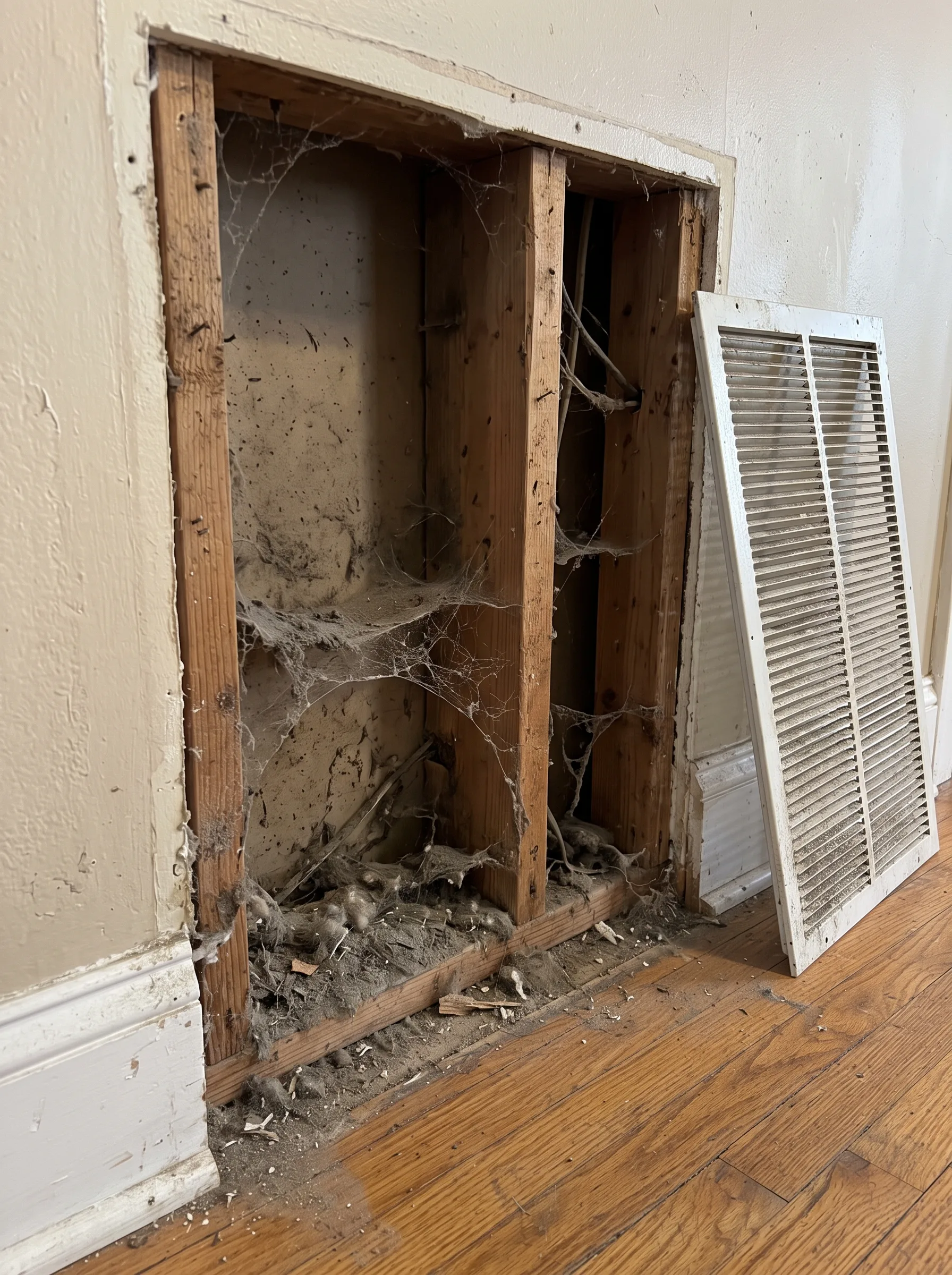
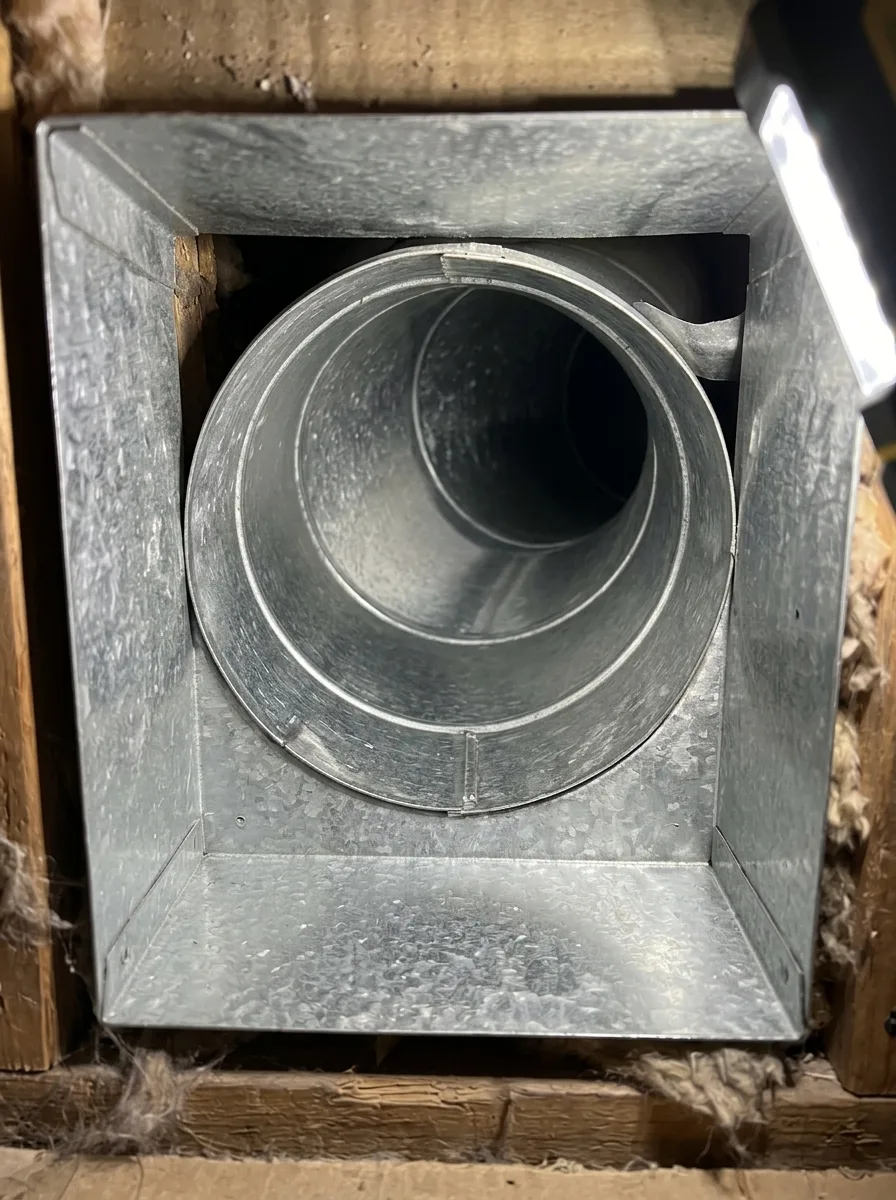
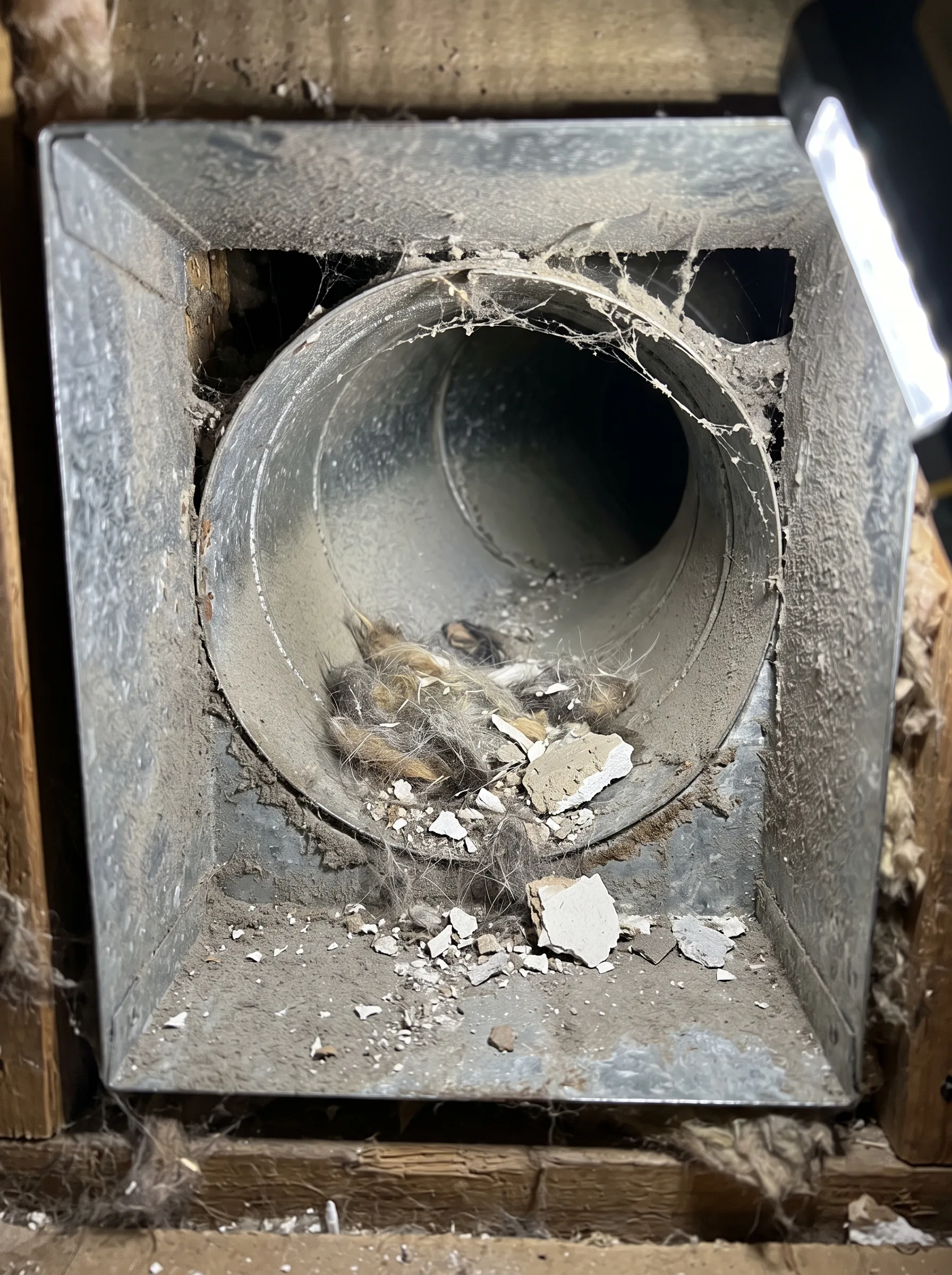
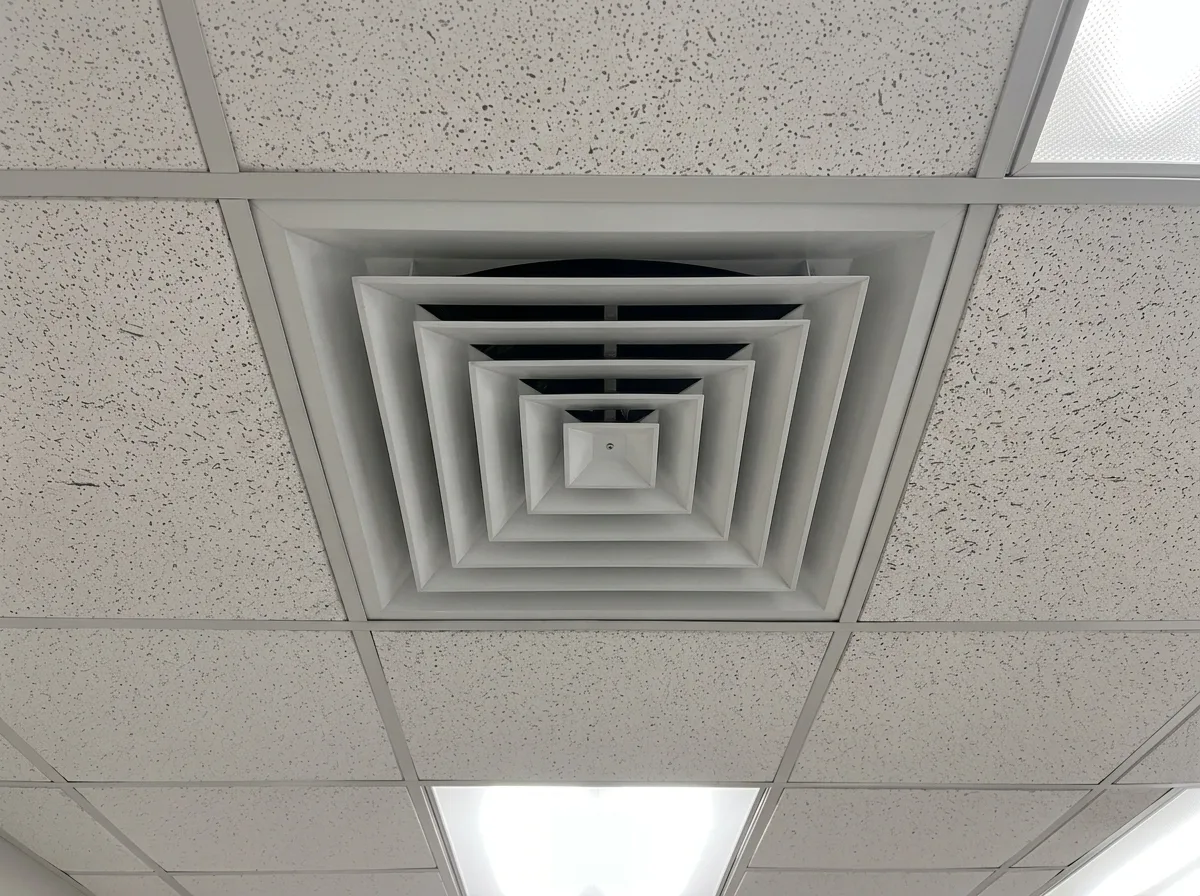
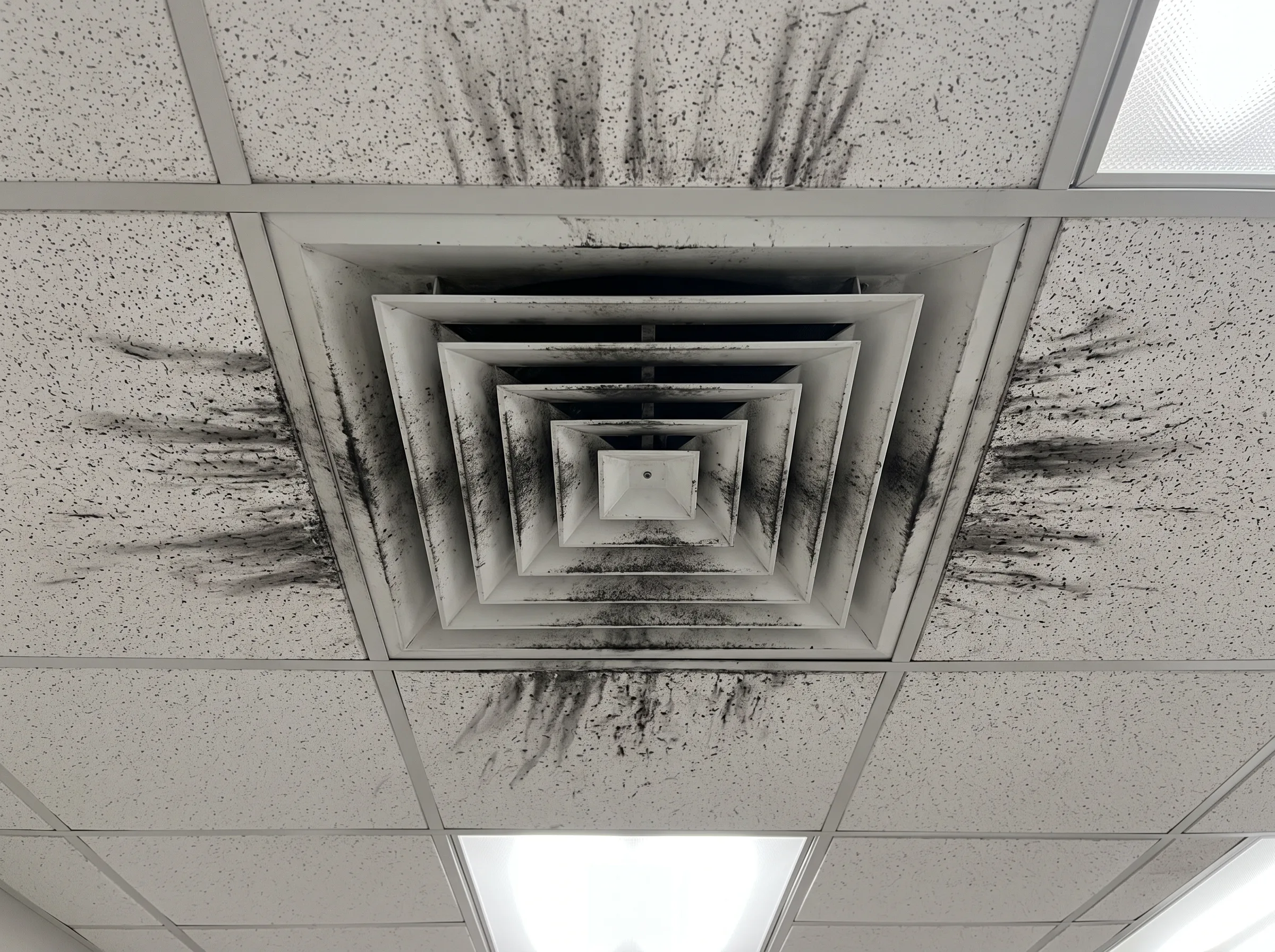
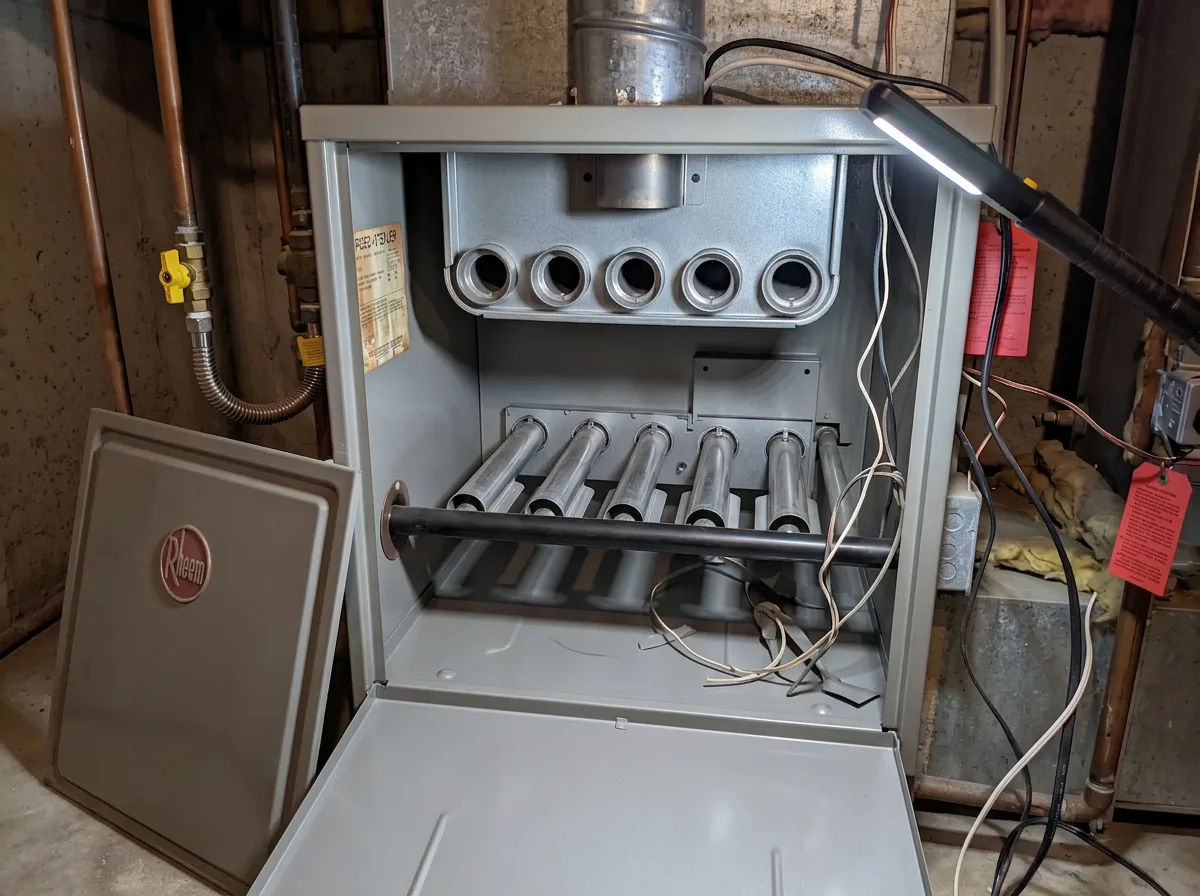
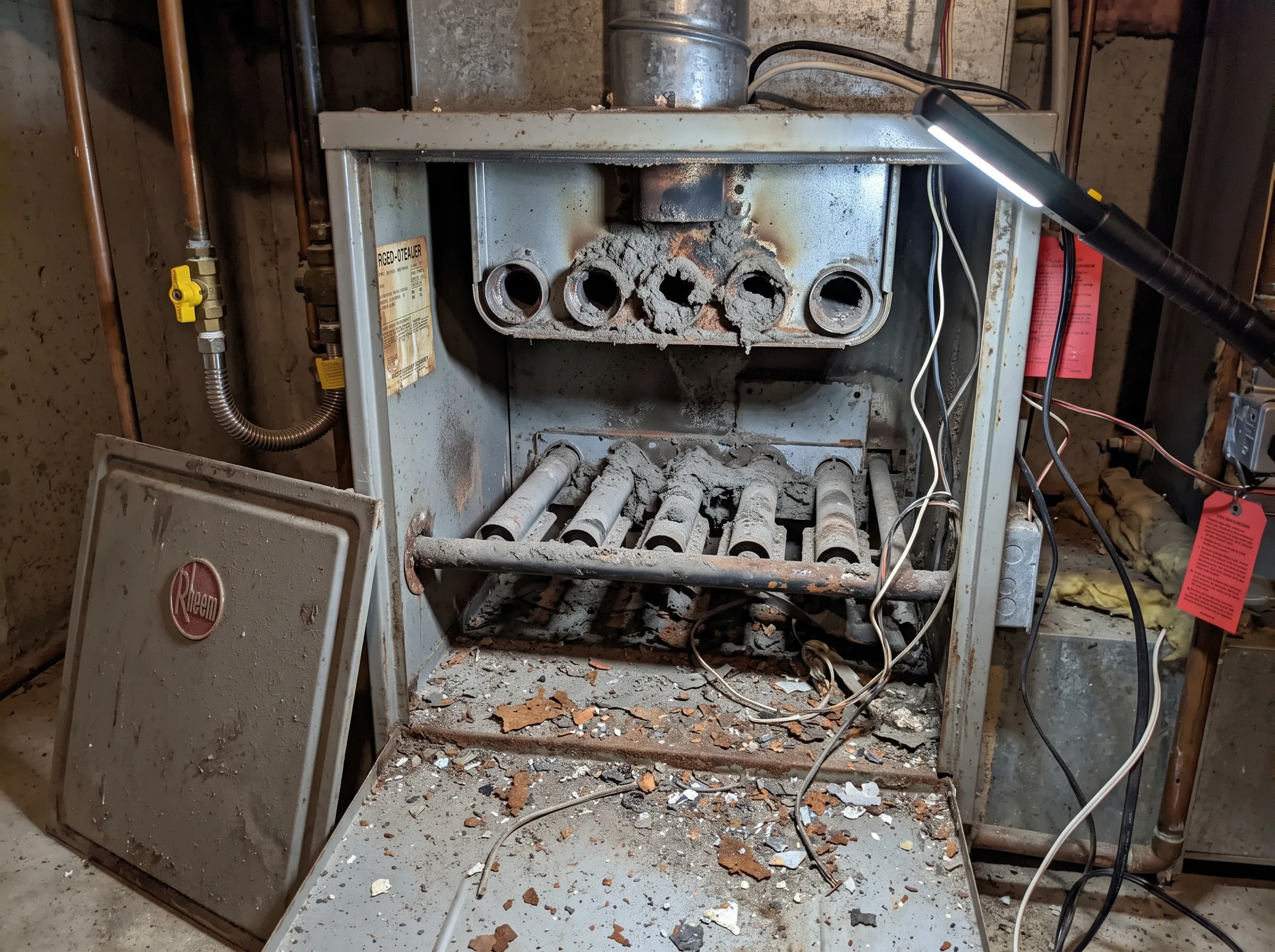
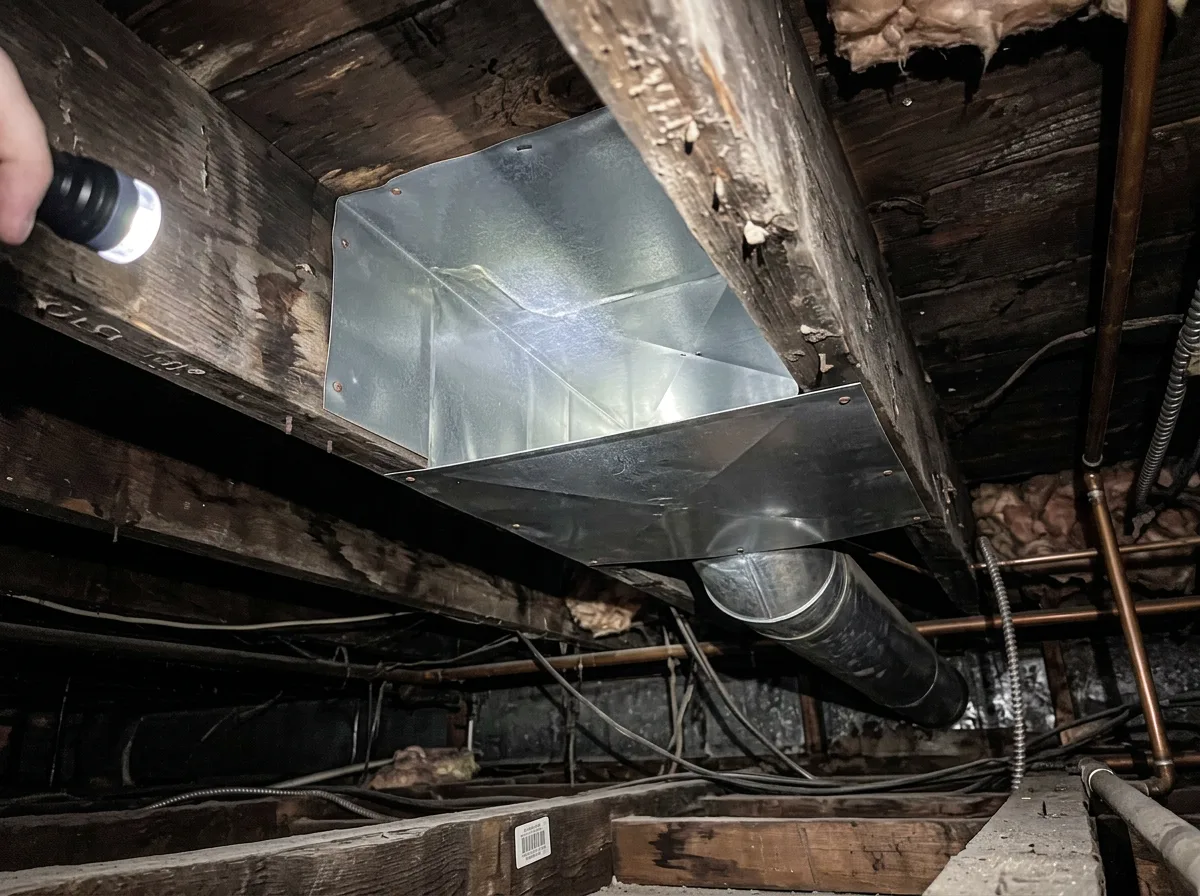
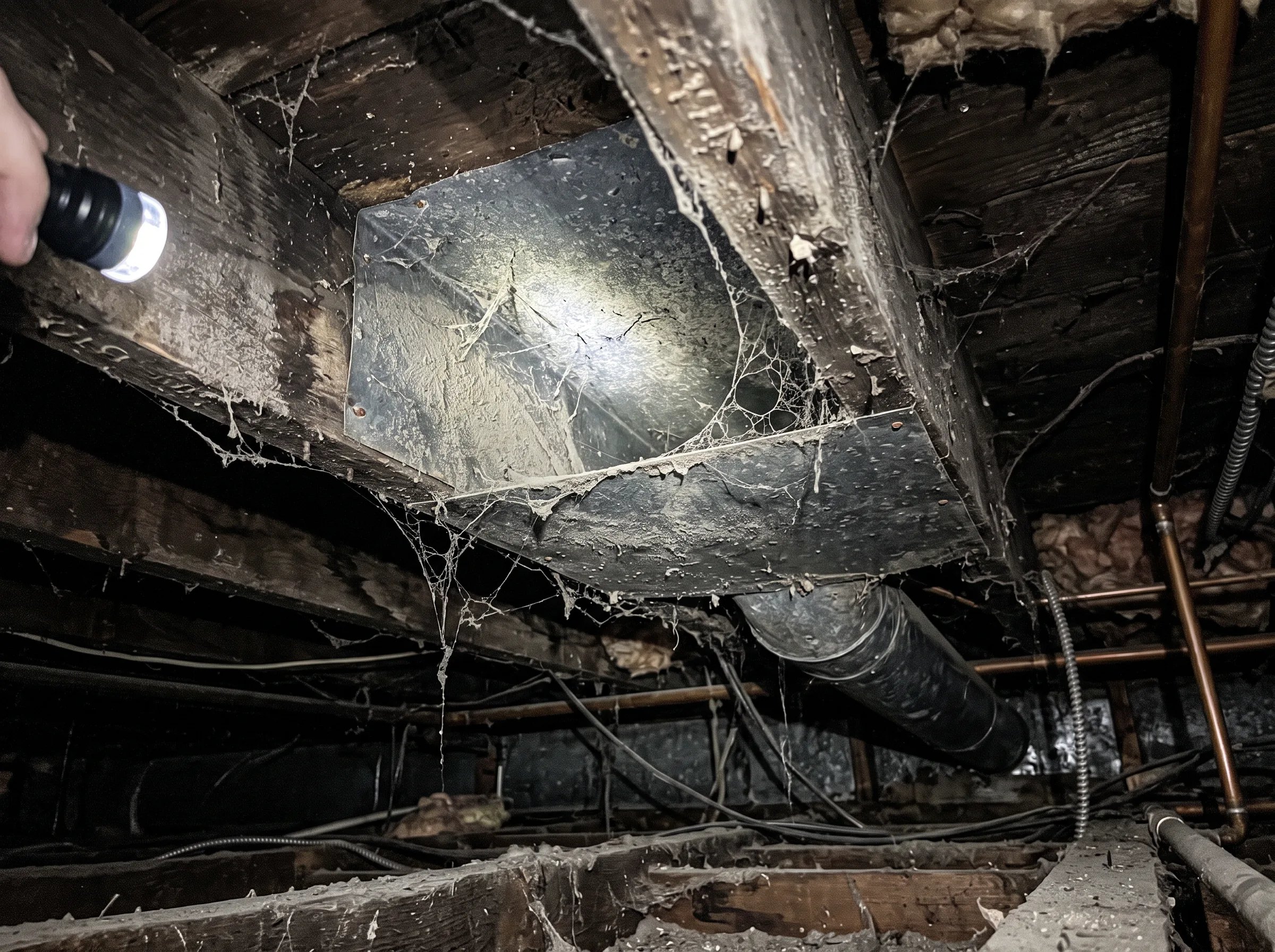
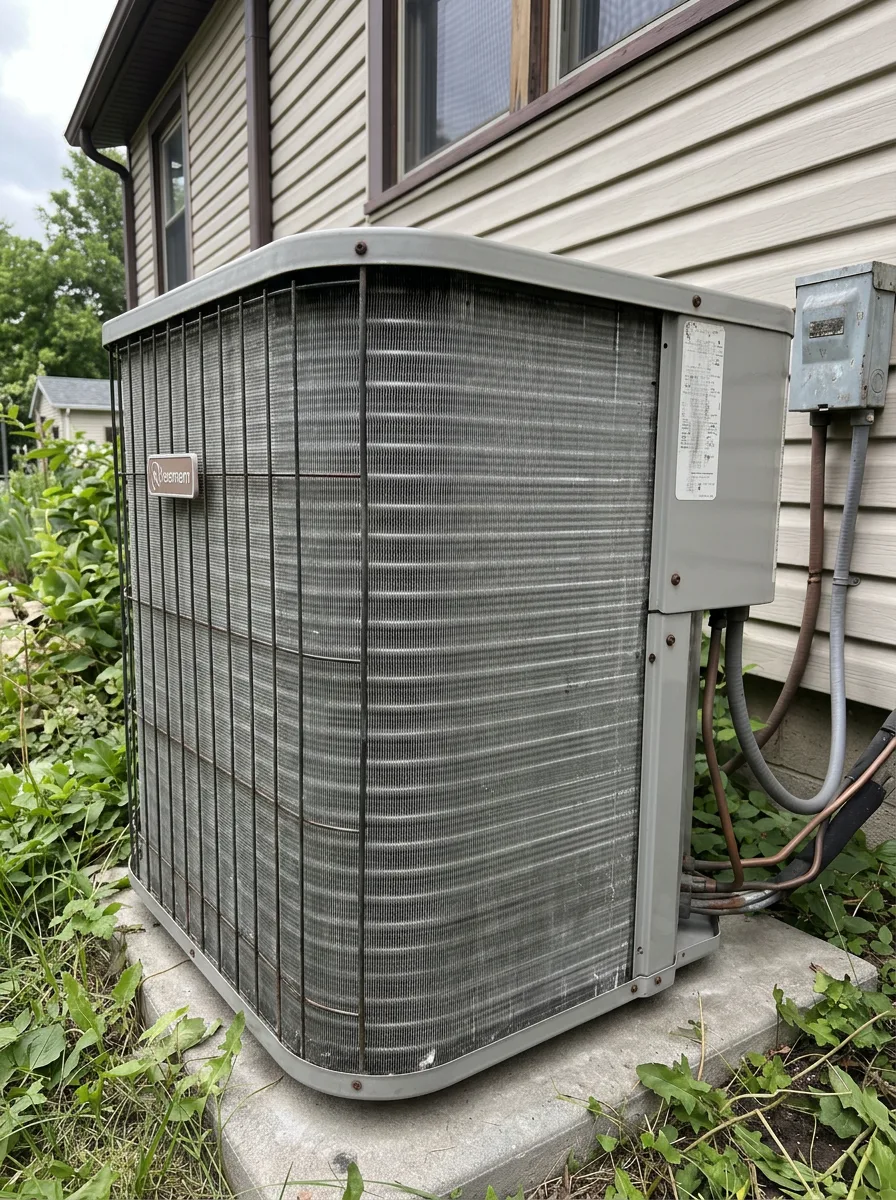
Drag the white handle on any photo below to compare the duct before and after cleaning. These are 20 unretouched comparisons from real jobs — the same source-removal process we bring to every Metro Detroit home and business.
On the job
Equipment, process, and crew — browse by category to see how negative-pressure duct cleaning actually happens.
About this gallery
The before-and-after sliders above are real supply and return ducts photographed on real jobs — matted dust, construction debris, pet hair, and decades of buildup on the left; bare, clean sheet metal on the right. No filters, no staging. It's the clearest way we know to show what negative-pressure source removal actually does inside a duct system, because the inside of your ductwork is the one part of your home you never get to see.
We publish this gallery for the same reason we photograph every job we do: when you're hiring an air duct cleaning company, you should be able to see actual evidence of the work — not a stock photo of a shiny vent. Every BH Air Duct Cleaning Metro Detroit job ends with before-and-after photos of your own ducts, so you never have to take our word for it.
How we work on site
Every job starts the same way: a walkthrough and register count, a flat-rate price confirmed before any equipment comes off the truck, floor and corner protection down, and then a full source-removal cleaning — negative-pressure vacuum sealed to your trunk line, every supply and return run agitated with rotary brushes and compressed-air whips, and the blower compartment detailed before we button the system back up.
If your ducts look like one of the "before" photos above, tap a button and we'll get you scheduled. Not sure? Ask about a camera inspection — if your ducts are clean, we'll tell you to keep your money, and show you the screen to prove it.
In depth
Frequently asked questions about air duct cleaning gallery work across Metro DetroitTap to read the full guide — pricing, the cleaning process, common questions, and how we work in Metro Detroit.
The questions below come straight from the calls and texts our dispatchers field every day from customers across Metro Detroit. They are written to help you make a good decision before you hire any air duct cleaning company — not just us.
How fast can a duct cleaning crew reach me in Metro Detroit?
Scheduled cleanings in Metro Detroit are usually available within a day or two, and we hold same-day slots Sunday through Thursday for urgent calls — furnace puff-backs, post-fire smoke odor, flood-contaminated ductwork, and dryer vents so blocked the machine overheats. Heavy-traffic windows on I-75, I-696, M-59, or the Lodge can push an ETA out, and we tell you that on the phone rather than leaving you guessing. We give you a real arrival window when you book, not a vague "sometime this week." If your situation involves active smoke odor, sewage water near ductwork, or a dryer that is shutting down on its thermal fuse, say so when you call; we route those jobs ahead of routine ones.
What does a written duct cleaning quote actually include?
A real air duct cleaning quote in Michigan lists the scope in plain terms: how many furnace systems, whether supply and return sides are both included, whether the main trunk lines, blower wheel, and evaporator coil are covered, any add-ons like dryer vent cleaning or sanitizing, and the flat total. It also names the company and the technician. If a company quotes you "$99 whole house" over the phone and refuses to put a scope in writing, you are talking to a bait operation, not a duct cleaning company. Walk away. Bait-and-switch is the single most common duct cleaning scam in Southeast Michigan, and the pattern is always the same: a rock-bottom teaser price, followed by a frightening "mold" diagnosis and a four-figure upsell in your basement.
Are you actually licensed and insured?
Yes. BH Air Duct Cleaning Metro Detroit is Licensed & Insured for residential and commercial air duct work in Michigan. Every technician is background-checked, on our payroll — no subcontractors — and covered by our general liability and workers' compensation insurance. We provide a certificate of insurance on request, which matters for commercial clients, property managers, and any homeowner whose insurer asks who performed restoration work after a fire or flood. We strongly recommend requesting proof of insurance from any duct cleaning company before they connect equipment to your furnace; the legitimate ones will not hesitate.
Do you charge a trip fee or inspection fee?
A service and inspection call is about $99, and it is credited toward the job if you go ahead with the work. It covers the drive plus a camera inspection of your ductwork, a look at the blower wheel and evaporator coil, and a written flat-rate quote for exactly what your system needs. If you decline the quote after we arrive and inspect, you owe only the inspection fee — never a surprise labor charge. We can be this transparent because we screen jobs carefully on the phone, so the crew arrives knowing the furnace count, the home's approximate size, and what problem you are trying to solve.
What method do you use — and why does the method matter?
Negative-pressure source removal, the method NADCA (the National Air Duct Cleaners Association) sets as the industry standard. We connect a high-powered vacuum to your main trunk line near the furnace, put the entire duct system under suction, and then work through every supply and return run with compressed-air whips and rotating brushes. Everything we knock loose travels toward the vacuum, not into your living room. The method matters because the alternative — a shop-vac held up to each register, or compressed air blown into vents with no collection — either cleans nothing or redistributes the dust through your house. If a company cannot describe its vacuum and where it connects, it does not have one.
Is the '$99 whole house special' really a scam?
Almost always, and here is the honest math. A proper source-removal cleaning takes a two-person crew, a truck-mounted or gas-powered vacuum, and two to four hours on site. No business can deliver that for $99 and survive. The ads exist to get a crew into your basement, where the play is a thirty-second "inspection," a flashlight pointed at ordinary dust, the word "mold" said gravely, and a $1,500–$3,000 rescue package. Consumer-protection agencies have flagged this exact pattern for years. Our whole-home cleanings run $350–$600 for a single-furnace home because that is what the work actually costs — and we publish that range instead of hiding it behind a teaser.
Do you clean the furnace blower and AC coil too?
Yes, and for many systems it is the most valuable part of the job. The blower wheel and evaporator coil are where airflow is actually won or lost — a blower wheel caked with dust moves dramatically less air, and a matted coil forces the system to run longer and hotter for the same comfort. Furnace and coil cleaning covers the blower wheel, the blower compartment, and the evaporator coil. If your complaint is weak airflow, rooms that never warm up, or a furnace that runs constantly, cleaning the ducts without cleaning the blower and coil solves half the problem.
How often should ducts and dryer vents be cleaned?
For most Metro Detroit homes, duct cleaning every 3–5 years is a sensible cadence — sooner after renovations, pest or water issues, when moving into a home with unknown history, or with multiple shedding pets. Dryer vents are different: once a year for most households, and every 6–9 months for heavy users and homes with long vent runs. In between duct cleanings, good filtration does most of the work, and we will recommend the right filter for your system rather than the most expensive one on the shelf.
Do you handle commercial buildings and multi-unit properties?
Yes. Offices, retail spaces, restaurants, medical and dental suites, daycare centers, gyms, and multi-unit residential buildings are all standard work for our commercial crews. We clean rooftop-unit supply and return systems, long horizontal trunk runs above drop ceilings, and shared dryer vent stacks in condo buildings across Metro Detroit and the rest of Metro Detroit. We work after hours where business operations require it, and planned-maintenance agreements — scheduled cleanings and inspections on a fixed cadence — are available for property managers who would rather find a problem during an inspection than during a tenant complaint.
Will duct cleaning fix my allergies or the dust in my house?
Honest answer: it helps when the ducts are genuinely part of the problem, and we can show you whether they are. If registers blow visible dust, if surfaces film over days after cleaning, or if the system carries renovation debris, pet dander, or pest material, removing that reservoir at the source makes a real difference. What no honest company will promise is that duct cleaning cures allergies or asthma — indoor air quality also depends on filtration, humidity, and what is happening in the living space. We pair every cleaning with a filter recommendation, because the filter is what keeps the system clean after we leave.
Someone told me I have mold in my ducts. Should I believe them?
Be skeptical, especially if the diagnosis took thirty seconds during a discount visit. Genuine microbial growth in ductwork happens — usually after water intrusion or sustained condensation — but it is far rarer than scare-tactic salesmen claim, and most of what gets called "mold" on the spot is ordinary dust. Our approach: we run a camera through your actual ducts and show you the footage. If growth is genuinely present, we physically clean it at the source and then apply an EPA-registered antimicrobial — sanitizer is applied only after physical cleaning, because fogging chemicals over dirt accomplishes nothing.
Do you serve property managers and HOAs?
We work with property-management companies and HOA boards across Metro Detroit, including Metro Detroit when applicable. We can be added as a preferred vendor, work from a single PO or master-services agreement, invoice on net-30 terms, and provide standardized scheduling for unit turnovers and annual dryer vent programs. For condo communities — where long shared dryer vent runs are a documented fire risk — we offer fleet pricing on building-wide vent cleaning and keep a record of every unit's vent routing so repeat visits are faster.
What payment do you accept?
All major credit cards (Visa, Mastercard, American Express, Discover), debit cards, Apple Pay, Google Pay, and cash. For commercial accounts we offer invoicing on net-15 or net-30 terms after a short qualification process. Every transaction generates a written digital receipt itemizing the work performed — useful for landlord records, home-sale disclosures, and insurance documentation after restoration jobs.
Is there a guarantee on the work?
Yes. Every cleaning comes with before-and-after photo or camera documentation of your actual ductwork, and a workmanship guarantee: if we missed a section, we come back and make it right at no charge. Dryer vent cleanings include an airflow check at the exterior termination so you can see the vent is genuinely clear before the crew leaves. If anything we touched is not performing as expected within the guarantee window, we return and fix it — no extra trip charge.
What should I have ready when I call?
A few things speed the job up dramatically: how many furnaces or air handlers the home has, the approximate square footage, whether the laundry is on an upper floor or in a condo (that changes the dryer vent equipment we bring), and anything specific driving the call — renovation dust, a smoke event, pets, allergies, or a musty smell. A photo of the furnace area helps too. We can run the job without any of this — but with it, the crew arrives with the right setup and you usually save time on site.
What if I just want a second opinion on another company's quote?
Send us a photo of the quote and, if you have them, the photos the other company showed you. We will tell you, plainly, whether the price is in line with the scope, whether the "mold" they found looks like mold or looks like dust, and whether the add-ons they stacked on are things your system plausibly needs. This is a free service and we offer it because the duct cleaning industry has more than its share of bait-price operators. You do not have to hire us afterwards.
Still have a question that's not here? Text us a quick photo or message at (313) 236-4558. A real technician will reply — usually within minutes during business hours, and around the clock for anything that sounds urgent.
How BH Air Duct Cleaning Metro Detroit handles air duct cleaning gallery work across Metro Detroit
Every job follows the same simple sequence regardless of where in Metro Detroit it sits on the map. You call or text us — usually with a photo of the furnace area if you can manage it — and a real dispatcher (not a call center, not a bot) gathers the basics: address, how many furnace systems, approximate home size, what problem you are trying to solve, and urgency. From there we schedule a crew, give you a real arrival window, a flat-rate quote, and a technician name. There is no "up to" pricing, no dummy ranges, and no "the tech will price it when he gets there" — those are the tells of lead-generation operations that flip your job to the lowest bidder and make the difference up in your basement.
On arrival the crew walks the system with you first — furnace, supply and return trunks, register count, and the dryer vent run if you booked that too — and confirms the written quote a second time before any equipment comes off the truck. Then the vacuum connects to the main trunk near the furnace and the whole system goes under negative pressure. Every supply run and every return run gets agitated with compressed-air whips and rotating brushes, working from the registers back toward the vacuum so dislodged debris travels into the collection system, not into your rooms. Registers come off, get wiped down, and go back on. The job ends with camera or photo documentation of the trunk lines so you can see — not take on faith — what changed.
Furnace and coil cleaning follows a longer checklist because it touches the equipment itself: blower assembly access, careful cleaning of the blower wheel (where caked dust measurably cuts airflow), the blower compartment, and the evaporator coil above the furnace. A duct system feeding a filthy blower is like a clean straw attached to a clogged pump — which is why, when a customer's complaint is weak airflow or rooms that never warm up, we quote the blower and coil alongside the ducts rather than selling half a fix. Sanitizing, when a job calls for it, is always the last step and only after physical cleaning: an EPA-registered antimicrobial applied to clean surfaces, never fogged over dirt as a substitute for actual work.
Dryer vent work in Metro Detroit deserves its own explanation because the stakes are different — this is fire prevention, not just efficiency. The lint screen inside your dryer catches only a fraction of the lint; the rest accumulates in the vent duct between the machine and the outside wall or roof. We clean the full run with rotary brushes sized to the duct, verify airflow at the exterior termination, and check the cap and damper for bird nests and lint mats. Long runs — second-floor laundry rooms and condos where the vent snakes 20–40 feet through the structure — are exactly where restrictions build fastest and where a home brush kit cannot reach. If we find crushed foil transition duct or the old white vinyl (a genuine fire hazard), we tell you and can replace it with the correct rigid metal.
Commercial work deserves its own paragraph because downtime and liability are money. A restaurant with a failing makeup-air balance, a medical suite that needs documented cleaning, a daycare with dust complaints, or a condo association staring at a building full of twenty-year-old shared dryer stacks — these are scheduling problems as much as cleaning problems, and we work after hours where operations require it. For facilities and multi-unit buildings we offer planned-maintenance agreements: scheduled cleanings and camera inspections on a fixed cadence, with per-unit records so every visit starts where the last one ended. The property managers who set these up stop fielding tenant air-quality complaints almost entirely, which is the point.
Pricing across Metro Detroit follows the same flat-rate structure regardless of city or neighborhood. Whole-home duct cleaning for a single-furnace home runs $350–$600 depending on size and vent count; a second furnace or system adds $150–$250. Dryer vent cleaning is $120–$200 standalone and discounted when bundled. Sanitizing adds $75–$150 when the job genuinely calls for it. The ~$99 inspection call is credited toward any work you book. Every quote is flat-rate and in writing before work starts. If the scope changes for any reason between the phone quote and the work — a second furnace nobody mentioned, a crushed duct that needs repair — we tell you before doing anything, and you can decline.
A note on the "$99 whole house" ads, because they are the part of this trade with real stakes for your wallet. No legitimate company can put a two-person crew and a negative-pressure vacuum in your home for three hours at that price. The teaser exists to get a salesman into your basement, where ordinary dust becomes "toxic mold" and the $99 becomes $1,500 under pressure. The Federal Trade Commission and consumer-protection agencies have documented this pattern for years. Our advice is simple whether or not you hire us: get the scope in writing, ask what vacuum they use and where it connects, ask to see before-and-after footage of your own ducts, and treat any on-the-spot mold diagnosis delivered without lab work or photos as the sales tactic it almost always is.
Finally, a note on how to compare quotes. A legitimate duct cleaning quote includes the company name, the number of systems covered, whether supply and return sides are both included, whether the blower and coil are in scope, the warranty terms, and a flat total. If an ad shows you a number under $100 for a whole house and the technician starts diagnosing contamination within minutes of arriving, that is the textbook duct cleaning scam pattern. Send the crew away, call us, and we will give you a real second opinion at no cost. We do this several times a week. It is one of the genuinely useful things a real duct cleaning company can do for Metro Detroit, and we are happy to do it whether or not you end up hiring us.
A few practical notes worth knowing before you call any duct cleaning company in Metro Detroit. Check your furnace filter monthly during the heating season and change it on schedule — a good filter is the single cheapest thing keeping your ducts clean between professional cleanings. Watch your dryer: if loads start taking more than one cycle, stop running it unattended and get the vent cleaned, because long dry times are the earliest warning of a lint restriction. And after any renovation involving drywall or sanding, plan on a duct cleaning before you judge the dust situation — construction silica settles into ductwork and recirculates for months. Those three habits prevent the majority of the urgent calls we run.
For homeowners, treat the duct system as part of your home's health envelope. Keep supply registers unblocked by rugs and furniture, keep basement return runs sealed at the joints (leaky returns pull basement air — and basement smells — into your living space), and if anyone in the house has allergies or asthma, invest in the best filter your blower can handle before investing in anything else. In this climate, where the furnace runs six-plus months a year, small duct problems show up on your furniture, your sleep, and your gas bill faster than almost anywhere in the country.
For small business owners, the analog is a documented maintenance plan. Even a one-page log that lists each rooftop unit or furnace, its filter size and change schedule, and the last duct and coil cleaning date will save you real money the first time an air-quality complaint or an overheating unit lands on your desk. A real duct cleaning company will help you write this for free during the first service visit. We do this all the time across Metro Detroit. The facilities that plan this once never have to think about it again; the ones that do not end up calling us the week a tenant, an inspector, or an insurance adjuster starts asking questions.
A quick history of forced-air heating in Southeast Michigan
Metro Detroit is, in a real sense, forced-air country. The post-war housing booms that built Warren, Livonia, Sterling Heights, and the rest of the suburbs installed gas forced-air furnaces and sheet-metal ductwork as the default in nearly every house, decades before much of the country converted from boilers and radiators. The result today is one of the densest concentrations of ducted homes in America — and one of the widest ranges of duct ages, from 1950s galvanized trunk lines still carrying their original construction dust to this year's sealed and insulated flex runs. When we open up a duct system in an older Detroit or Dearborn neighborhood, we are sometimes the first people to see inside it in sixty years.
That range matters for homeowners because the trade has changed underneath the ductwork. Filtration went from loose fiberglass pads that stopped almost nothing to pleated media and electronic air cleaners that genuinely protect the system. Duct sealing went from an afterthought to a measured science, because leaky return runs in basements and crawlspaces quietly pull unconditioned air — and everything in it — into the airstream. And the cleaning industry itself professionalized: NADCA, the National Air Duct Cleaners Association, published the ACR standard that defines what a real cleaning is — source removal under negative pressure, the entire system rather than the visible vents, verified results. If a company cannot tell you what standard it cleans to, it is telling you something.
The dryer vent story has evolved just as fast, and in the wrong direction for safety. As laundry rooms migrated from basements (with a three-foot vent through the rim joist) to second floors and interior condo walls, vent runs stretched to twenty, thirty, forty feet with multiple elbows — every foot and every bend a place for lint to settle. U.S. fire departments respond to thousands of dryer fires a year, and failure to clean is the leading factor. The fix is not exotic: annual cleaning with proper rotary equipment, rigid metal duct instead of foil or vinyl, and an exterior termination that actually opens. It is the least glamorous work we do and arguably the most important.
Michigan's climate is the other constant in this story. Our heating season runs six-plus months, so the blower cycles household dust through the ducts far longer each year than in milder states. Our humid summers condense moisture inside cool basement ductwork, which is where genuine microbial problems start. Our springs fill the air with pollen that a marginal filter passes straight into the system, and our older housing stock — Detroit, Dearborn, the Grosse Pointes, Ferndale — carries decades of accumulated debris in original ductwork. A cleaning cadence that makes sense in Arizona does not transfer here, which is why we recommend every 3–5 years for ducts and annually for dryer vents, adjusted for pets, allergies, renovations, and what the camera actually shows.
For everything we touch, our written policy is the same: clean at the source, document the work with before-and-after footage, apply sanitizer only after physical cleaning and only when the job calls for it, and stand behind the result. The duct cleaning trade has had to earn customer trust the hard way after years of $99 bait operators flooding the search results, and the way we earn it is by doing exactly what we said we would do — on time, in writing, for the agreed price. That standard is portable across Metro Detroit and the rest of Metro Detroit, and it is the reason our guarantee terms are printed on every invoice we send.
One small thing worth saying explicitly: we are a small, local business. The phone number on this page reaches the dispatcher who actually rides with the crews. There is no offshore call center, no national franchise upcharge, no surprise "corporate dispatch fee." That model — a national paid-search operation flipping calls to whichever subcontractor is cheapest that hour — is the reason consumer-protection agencies keep flagging air duct cleaning as one of the most-scammed home service categories in the United States. We have spent years building the alternative: a real shop with real equipment, real employees, and a single phone number that reaches the people who do the work. If you are comparing duct cleaning companies in Metro Detroit on price alone, please at least ask each candidate for proof of insurance, the standard they clean to, and a written flat-rate scope first. The difference between a $99 teaser ad and a written quote with a defined scope is the difference between getting your ducts cleaned and getting your wallet cleaned out.
If you got this far in the page, thank you for reading. Most people will scroll past everything below the call-to-action and grab the phone number, and that is exactly what these pages are for — they exist so the people who do read have a thorough, honest answer to the questions that come up before they pick an air duct cleaning company. We did not write any of this to fill space. It is the answer we would want if we were on the other side of the basement stairs, staring at a stranger's flashlight pointed at our own ductwork, deciding which name on the first page of search results was worth trusting with our home. If something here helped you make a better decision — about us or about any other company — that is the entire point.
Buyer's guide
How to choose an air duct cleaning company in Metro DetroitTap to read the full guide — NADCA standards, the $99 coupon scam anatomy, equipment that actually works, and how to vet any duct cleaner before they roll a hose into your house.
The air duct cleaning industry in Southeast Michigan has more than its share of bad actors — arguably a worse ratio than any other home service. Search any Metro Detroit coupon mailer or social media marketplace and you will find the same ad over and over: "whole house air duct cleaning, $99, unlimited vents." That ad is not a deal. It is the front end of a bait-and-switch machine that the Better Business Bureau and the Federal Trade Commission have both written warnings about by name. The scam follows a pattern, and once you know the pattern, it is easy to avoid — which is exactly what this guide is for.
The single most useful credential in this trade is NADCA — the National Air Duct Cleaners Association — and its ACR standard, which spells out how a duct system is actually supposed to be cleaned: every supply, every return, the trunk lines, and the HVAC components themselves, using source removal under negative pressure, with verification that the system is visibly clean afterward. Michigan does not license duct cleaning as a standalone trade, so NADCA membership and technicians certified as Air Systems Cleaning Specialists are the closest thing to a meaningful credential the industry has. A company does not have to be a NADCA member to do honest work, but a company that follows the ACR standard can tell you exactly what that standard requires — and a company that has never heard of it is guessing with your ductwork.
The second filter is equipment, because the equipment defines what is physically possible. Real duct cleaning is done with negative pressure: a truck-mounted vacuum or a HEPA-filtered portable unit is connected to the trunk line and pulls the entire system into suction, while agitation tools — rotary brushes, air whips, compressed-air skippers — travel through each branch run and knock debris loose so the vacuum can carry it out. That is source removal, and it is the only method the ACR standard recognizes. The other thing sold as duct cleaning is a technician with a shop vac and a long brush attachment, reaching a few feet into each register. That removes what you could remove yourself with a Saturday afternoon and a vacuum, leaves the trunk lines untouched, and is what the $99 coupon actually buys. Ask every company you call one question: what vacuum unit do you use, and where does it connect? A real outfit answers in seconds.
The third filter is insurance. Proof of general liability and workers' compensation coverage separates a real company with real employees from a guy answering a lead-generation ad. A legitimate company produces a certificate of insurance on request, without drama, usually within the hour. It matters twice over: liability coverage protects your property if a job goes wrong — a cracked ceiling from an access cut, a damaged furnace panel, a punctured flex run — and workers' comp means a technician hurt in your attic or crawlspace is not your homeowner's policy's problem. BH Air Duct Cleaning Metro Detroit is Licensed & Insured, and we encourage you to ask us — and everyone else you call — for the paperwork.
The fourth filter is the quote itself. Honest duct cleaning pricing is bounded and quotable over the phone: for a typical Metro Detroit single-furnace home, a genuine whole-system cleaning runs roughly $350–$600 depending on the number of vents, the number of returns, and the condition of the system, with second furnaces and add-ons priced as disclosed line items. The quote should be written and itemized: how many supplies and returns are included, whether the trunk lines and the return side are cleaned (they are the dirtiest part of the system and the part shop-vac outfits skip), whether the blower compartment is included, what access holes will be cut and how they will be sealed, and what the total out-the-door number is. If a company cannot put the scope in writing before the truck rolls, the scope will be negotiated on your driveway — and you will not be the one winning that negotiation.
Now the anatomy of the $99 coupon, because it deserves its own paragraph. The math is simple: no legitimate company can send two technicians and a negative-pressure rig to your house for two to four hours for $99. The coupon exists to get a salesman inside. Once inside, the script begins: the $99 turns out to cover "one unit and ten vents," and your house — like every house — has more vents than that, at $25 to $50 each. Then the technician shines a flashlight into a return, photographs ordinary household dust at maximum zoom, and announces a problem. The $99 job leaves as a $900 to $1,800 invoice, and the actual cleaning performed is still the shop-vac version. The FTC has documented this exact sequence for years. The defense is simple: any advertised price dramatically below the honest market range is not a price, it is bait, and the correct response is to not schedule the appointment.
The most abusive branch of that script is the mold scare. The technician shows you a dark smudge inside a duct or on the blower housing, says the word "mold," and quotes a four-figure remediation on the spot. Here is what an honest company tells you instead: nobody can identify mold species by flashlight. Visible growth on a wet evaporator coil or drain pan is common and is fixed by cleaning the component and correcting the moisture source — not by fogging your ducts with mystery chemicals. If genuine widespread contamination is suspected, the honest move is a lab sample and, if confirmed, remediation under proper containment. A company that diagnoses mold in thirty seconds and cures it in an hour with a spray wand is running a script, not a service. No scare tactics is a company policy of ours, and it should be a hiring criterion of yours.
Sanitizer deserves the same scrutiny. Duct sanitizing — fogging an EPA-registered antimicrobial through the system — is a legitimate finishing step in specific situations: after confirmed microbial growth has been physically removed, after smoke or sewage events, or when odors persist after cleaning. It is legitimate only after physical source removal, because spraying disinfectant over dirt just gives you wet, chemically scented dirt. The scam version inverts this: the crew skips or shortcuts the cleaning, then sells a $200–$400 "sanitizing treatment" as the main event because fog is fast and margin is high. Ask two questions: what product, exactly (a real answer includes an EPA registration number), and is it applied before or after the mechanical cleaning? Wrong or vague answers to either one tell you what kind of company you are dealing with.
The fifth filter is photo documentation, and it is the single easiest way to verify you got what you paid for. Duct interiors are invisible to you, which is precisely why the honest end of this industry has standardized on before-and-after photos or camera-inspection footage of the trunk lines and representative branch runs — taken in your house, on that visit, not stock photos from a website. Ask on the phone whether documentation is included. A company that cleans systems properly is proud to show the difference; a company that objects to documenting its own work has told you why. We photograph every job, and we walk homeowners through the images before we leave.
The sixth filter is street presence and review pattern. Real duct cleaning companies have a base of operations that matches their service area, a long review history with photos, named technicians, and specific job details — "they showed me the trunk line camera footage in Livonia" reads very differently from "great service!!" five hundred times. Watch for the tells of a review-farmed profile: bursts of five-star reviews from accounts that have reviewed nothing else, a business address that resolves to a virtual office or a UPS store, and a phone number that routes to a national call center that books "appointments" and auctions your job to whoever is nearby. The work might still happen, but the accountability is gone the moment you have a complaint — the call center never touched your ducts and the subcontractor never gave you his real name.
Know what a real crew looks like on arrival, because the driveway is your last checkpoint. A legitimate duct cleaning visit is two technicians, a marked vehicle, and equipment that takes real effort to bring in: a vacuum unit connected to your trunk line near the furnace, long hoses, an air compressor, drop cloths, and corner guards for the hose runs. Setup alone takes twenty to thirty minutes, and a genuine whole-house cleaning on a single-furnace home takes two to four hours. If one person arrives in an unmarked minivan with a shop vac and is packing up ninety minutes later, you did not get a duct cleaning — regardless of what the invoice says. Real crews also protect the house: floors covered, registers removed carefully and reinstalled, access holes sealed with proper plates or plugs, and the furnace panels put back the way they were found.
Dryer vent cleaning belongs in this conversation because it is the one service with a genuine safety dimension, and because it bundles naturally with duct work. Lint-clogged dryer vents are a leading cause of house fires — that is a fire-marshal statistic, not a sales line — and the symptoms are mundane: clothes taking two cycles to dry, a hot laundry room, a burning smell. Honest standalone pricing in Metro Detroit runs $120–$200 depending on run length and roof versus wall termination, and most reputable companies discount it meaningfully when bundled with a duct cleaning since the crew and equipment are already on site. The upsell version to watch for is the reverse: a $99 duct coupon crew "discovering" a dryer vent emergency and pricing it like one. The fix is the same as everywhere else in this guide — get the number, in writing, before anyone touches anything.
Warranties and guarantees are the filter most customers forget to pin down. Duct cleaning has service guarantees exactly like any other trade: reputable companies stand behind the work with a written satisfaction guarantee — typically that if you find an area that was missed, they return and make it right at no charge — and they warrant any physical work like access-panel installation or duct sealing against workmanship failures for at least a year. Beware the inverted version: a "lifetime freshness guarantee" on a sanitizing fog is marketing vapor, because there is nothing to warranty. If a company cannot describe its guarantee in plain language, or if "all sales final" appears anywhere on the invoice, that is a tell. Real companies back their work because they expect to be in business in five years and expect to clean your system again in three to five of them.
For commercial customers a slightly different filter applies. You want a company that can produce a one-page proposal with the scope itemized to the ACR standard — air handlers by unit number, supply and return trunks by zone, VAV boxes, coil cleaning, containment and after-hours provisions — plus labor lines, warranty terms, and insurance certificates on company letterhead, signable as a purchase order. If your vendor cannot produce that document on request, they are a residential outfit stretching, and a medical office, restaurant, or light-industrial building needs a different vendor. The same company may be excellent at single-furnace colonials and unsuitable for a rooftop-unit portfolio; those are different skill levels, and the marketplace rewards specialization. We do both — and we are honest about the difference, and happy to recommend other reputable Metro Detroit companies for the rare job outside our wheelhouse.
Here is the condensed red-flag list, suitable for taping next to the phone. Advertised whole-house prices under $200. Per-vent pricing revealed only after arrival. No mention of negative-pressure equipment, or evasiveness when you ask what the vacuum connects to. Mold diagnosed by flashlight and cured by fog. Sanitizer sold as the main service instead of a finishing step. No written scope before the truck rolls. No before-and-after photos offered. No certificate of insurance available. A review profile that is all five stars from empty accounts. High-pressure "this price is only good today" tactics. Any one of these is a reason to slow down; two or more is a reason to hang up.
On the second opinion: if a crew in your house quotes a number that surprises you, you are allowed to send them away, pay only the disclosed trip or inspection fee, and call another company. Michigan consumer law does not require you to accept a quote just because the truck rolled, and it certainly does not require you to authorize work invented on your driveway. On a four-figure "mold remediation" diagnosis, a second opinion is worth paying for twice. Crews who refuse to leave without payment of the full inflated estimate are crossing into criminal territory; if it happens to you, the non-emergency police line will help, and a written complaint to the Michigan Attorney General's consumer protection division is exactly the mechanism that gets these operations shut down.
Honesty also requires saying when duct cleaning is not the answer, because a company that recommends it for everything is a sales organization. The genuine triggers: visible debris or pet hair blowing from registers, post-construction or renovation dust, a home purchase where the system's history is unknown, rodent or insect evidence in the ducts, smoke or water events, and heavy-shedding pets or allergy sufferers on a three-to-five-year cycle. What duct cleaning does not do is cure a dusty house by itself (most household dust is generated in the living space), fix airflow problems caused by undersized returns, or need repeating every year in a normal home. An honest company will sometimes tell you to save your money and change your filter more often. That answer, when you get it, is the strongest hiring signal in this entire guide.
On camera inspections: the borescope is the honest industry's favorite tool and the dishonest industry's favorite prop, and the difference is context. Used honestly, a camera run before the job documents actual conditions and scopes the work, and a run afterward proves the result — the same footage that anchors the photo documentation covered above. Used dishonestly, a zoomed-in frame of ordinary dust becomes a horror slide justifying a four-figure invoice. The tell is whether the company shows you the whole run or a single scary frame, and whether the footage comes with a measured recommendation or an on-the-spot ultimatum. Ask for the full video. Honest companies hand it over; the other kind changes the subject.
On maintenance and frequency: ductwork is not a filter and does not need annual cleaning, no matter what the postcard says. NADCA's guidance for a typical home is every three to five years, sooner with heavy-shedding pets, smokers, recent renovation, or allergy and asthma concerns — and dryer vents genuinely are an annual item. Between cleanings, the highest-value habits are boring: a quality filter changed on schedule, supply registers kept open (closing them raises static pressure and hurts the system), and a spring coil cleaning if your AC sweats through Michigan humidity. A company whose maintenance plan is built around those realities is a service organization; a company selling you an annual whole-house cleaning is optimizing for the invoice. Hire the first kind.
Worth mentioning one more time: we are Licensed & Insured. Our phone is (313) 236-4558. Our crews work Wayne, Oakland, and Macomb counties every day, every technician represents BH Air Duct Cleaning Metro Detroit directly — not a subcontractor booked through a call center — and every job gets a written scope up front and photos at the end. Whether or not you end up hiring us, we hope you take this guide with you. The next time you need duct or dryer vent work in Metro Detroit, ask the questions above. The trade has good people in it; you just have to know how to find them.
Glossary
Air duct and HVAC terms, explained in plain languageTap to expand a plain-language glossary of the terms duct cleaning techs actually use — negative pressure, trunk line, blower wheel, MERV rating, and more.
The duct cleaning trade has its own vocabulary and most of it never makes it onto the invoice in a form a homeowner can understand. Here is a short, opinionated glossary of the terms we use most often on the phone and on the truck. If you are calling around for a quote, knowing these terms will make every conversation shorter and every estimate easier to compare.
Supply ducts — the half of your duct system that delivers conditioned air to the rooms: warm air in winter, cool air in summer. Supplies terminate at the registers in your floors, walls, or ceilings, and they run under positive pressure whenever the blower is on. Because air is always pushing outward through them, supplies tend to stay somewhat cleaner than returns — which is why a quote that only covers "the vents" may be cleaning the cleaner half of your system and skipping the dirty half.
Return ducts — the other half: the ducts that pull air from the house back to the furnace to be filtered and reconditioned. Returns run under suction and inhale everything airborne in the living space — dust, pet hair, skin cells, carpet fiber — so they are consistently the dirtiest ductwork in any home. A real cleaning always includes the return side; a coupon cleaning almost never does. If you only remember one question from this glossary, ask whether the returns are included.
Trunk line — the large main duct, usually rectangular sheet metal running the length of the basement ceiling, that acts as the highway for the whole system. Every room's duct branches off the trunk. It is also where a negative-pressure vacuum connects during a proper cleaning, and where decades of debris settle by gravity. A crew that never touches your trunk line — never connects to it, never cuts an access opening in it — is not cleaning your duct system, whatever the invoice says.
Branch runs — the smaller ducts, round metal or flex, that split off the trunk line and carry air to each individual register. Branches are where agitation tools do their work during a cleaning: a whip or brush travels down each run from the register opening, driving debris back toward the trunk where the vacuum captures it. Long branch runs to far bedrooms are also the usual suspects when one room never gets comfortable.
Register vs. grille vs. diffuser — three words for the covers on your duct openings, and the distinction is practical. A register has an adjustable damper you can open and close; a grille is a fixed cover with no damper, standard on returns; a diffuser is the ceiling fitting that spreads air in a pattern, common in newer builds. Techs use the words interchangeably on the phone, but on an itemized quote the count of supplies and returns is what drives the price — so count your covers before you call.
Boot — the sheet-metal transition fitting that connects the end of a branch run to the register opening in your floor or wall. Boots are where debris, pet toys, construction screws, and the occasional LEGO collect, and floor boots in particular act as open trash bins for whatever gets kicked in. Boots are also a common leak point: an unsealed gap between the boot and the floor cut pulls dusty joist-cavity air into your airflow. Cheap to seal, worth asking about.
Plenum — the sheet-metal box attached directly to the furnace where air is collected and distributed: the supply plenum sits above the furnace and feeds the trunk, and the return plenum (or return drop) delivers incoming air to the filter and blower. Plenums are the crossroads of the system, they see every particle that moves through the house, and they are one of the first places a camera inspection looks to judge how dirty a system really is.
Air handler — the umbrella term for the indoor unit that moves the air: in most Metro Detroit homes that is the furnace itself, whose blower serves both heating and cooling. The air handler contains the blower wheel, the motor, and the control board, with the evaporator coil mounted alongside or above. When a duct cleaning quote says it includes "the air handler," pin down what that means — a proper job opens the blower compartment and cleans it, rather than treating the furnace as a sealed box between two clean ducts.
Blower wheel — the squirrel-cage fan inside the air handler that actually moves every cubic foot of air in your house. Its dozens of small curved fins load up with fine dust, and a blower wheel caked with even a sixteenth of an inch of buildup can lose a fifth or more of its airflow while making the motor work harder and run hotter. Cleaning it is a component job — the wheel is accessed or pulled and washed — and it is one of the highest-value line items in HVAC cleaning, because you feel the airflow difference the same day.
Evaporator coil — the A-shaped refrigerant coil above the furnace that cools your air in summer. It runs cold and wet, which makes its densely packed fins a magnet for dust and, left long enough, a happy home for microbial growth — the source of that musty smell when the AC kicks on. A dirty coil also chokes airflow and can ice over into a solid block. Coil cleaning is a legitimate, separately priced service; just confirm the coil is being physically cleaned, not merely sprayed with deodorizer.
Heat exchanger — the sealed steel chambers inside the furnace where combustion happens: burner exhaust stays inside the exchanger while household air passes over the outside and picks up heat. The two air streams must never mix — a cracked heat exchanger can leak carbon monoxide into the airflow, which is a furnace-replacement conversation, not a cleaning one. Duct cleaners work around the exchanger, not inside it; a crew that claims to "clean your heat exchanger" as a line item deserves follow-up questions.
Flex duct — the wire-coil, plastic-and-insulation duct that looks like a giant dryer hose, common in newer builds, attics, and finished-basement retrofits. Flex works fine when stretched taut and properly supported, and poorly when kinked, crushed, or sagging. It also demands gentler cleaning: aggressive rotary brushes can tear the inner liner, so a competent crew switches to air-driven tools on flex runs. If your home has flex, ask the company how they clean it — the answer tells you whether they have thought about it.
Duct liner — fiberglass insulation bonded to the inside of some ducts, mostly for sound-deadening near the air handler and in commercial systems. Lined duct cannot be cleaned like bare metal: hard brushes shred the liner and send fibers into the airstream, so the ACR standard prescribes soft-bristle, non-aggressive methods for it. Liner that is wet, moldy, or deteriorating cannot be cleaned back to health at all — it gets replaced or the duct gets relined. A crew should identify liner before quoting, not discover it mid-job.
Negative pressure / source removal — the method that defines legitimate duct cleaning. A high-powered vacuum connects to the trunk line and puts the entire duct system under suction (negative pressure), so nothing escapes into the house; agitation tools then work through every branch driving debris toward the vacuum, which physically removes it from the system. That combination — agitate and extract — is source removal, and it is the only method NADCA recognizes. Everything else — fogging, spraying, vacuuming a few feet into each register — leaves the source in place.
HEPA filtration — High-Efficiency Particulate Air: a filter class that captures 99.97% of particles at 0.3 microns. On a duct job it matters most on portable vacuum units that exhaust inside your home — HEPA filtration means the fine dust pulled out of your ducts stays in the machine instead of recirculating into your living room. Truck-mounted units sidestep the issue by exhausting outdoors. Either is fine; a portable unit without HEPA is not.
Rotary brush — a spinning brush head on a flexible cable shaft, driven by a drill or dedicated motor, fed down each duct run to scrub the walls while the vacuum pulls the loosened debris away. Rotary brushes excel on bare sheet metal and on caked-on buildup, and a good crew carries multiple head sizes to match round branch runs and rectangular trunk. Their limitation is the reason crews carry air tools too: brushes are too aggressive for flex duct and lined duct.
Air whip — a compressed-air tool with several flexible rubber tentacles that thrash rapidly inside the duct, beating debris off the walls and driving it toward the vacuum. Whips shine exactly where brushes struggle — flex duct, lined duct, and lightweight debris like pet hair and drywall dust — because they agitate hard without abrading the surface. The sound of a whip working through a duct run is unmistakable; hearing it during your job is a good sign the crew is doing real agitation.
Air skipper — a compressed-air nozzle with rear-facing jets that propel it forward through the duct on its own, "skipping" along while blasting debris back toward the vacuum connection. Skippers are the tool of choice for long branch runs and tight turns that a brush shaft cannot negotiate. Real crews use brushes, whips, and skippers in combination, matching the tool to each run — which is why "what tools do you run through the ducts?" is such an effective screening question on the phone.
Access panel — the openings a crew cuts into the trunk line and plenum to connect the vacuum and feed agitation tools, since duct systems are not built with cleaning doors. The professional standard is to close every opening with a proper sheet-metal patch, a reusable access door, or a rated plug — sealed airtight. Duct tape over a raw hole is not a closure, and the state of the access points after the crew leaves is one of the easiest ways to judge the quality of the whole job.
MERV rating — Minimum Efficiency Reporting Value, the 1–20 scale for how well a filter captures particles. Cheap fiberglass pads are MERV 1–4 and mostly protect the equipment; MERV 8–11 is the practical sweet spot for most Metro Detroit homes; MERV 13 captures smoke and finer allergens but breathes harder. The catch: a filter more restrictive than your blower can handle raises static pressure and hurts airflow. Higher is not automatically better — matched to the system is better.
Static pressure — the resistance the blower pushes against to move air through the system, measured in inches of water column; think of it as the duct system's blood pressure. Dirty coils, clogged filters, crushed flex, and closed registers all raise it, and high static pressure means less airflow, more noise, and a motor working toward an early grave. It is also why closing registers in unused rooms — the classic homeowner "efficiency" move — usually backfires.
CFM / airflow — cubic feet per minute, the measure of how much air the system actually moves. A typical residential furnace is designed for roughly 400 CFM per ton of cooling, and everything in this glossary — duct sizing, filter choice, coil condition, blower cleanliness — ultimately cashes out in CFM. When a room is always stuffy or cold, the question is almost never "is the thermostat broken" and almost always "where did the CFM go."
Anemometer — the handheld instrument that measures air velocity at a register, from which airflow is calculated. It turns "the airflow seems better" into a before-and-after number, which is why quality-minded crews carry one and take readings at problem registers before and after cleaning. You do not need to know how to use one — you just want to hire the kind of company that does.
Antimicrobial fogging — applying an EPA-registered antimicrobial as a mist through the duct system to treat surfaces after microbial growth has been physically removed. Done right, it is a finishing step with a specific product, a registration number you can look up, and a label that permits use in HVAC systems. Done wrong, it is the whole service — fog sprayed over dirt as a substitute for cleaning — and that version is the single most common upsell scam in this industry. Fogging comes after source removal or it is theater.
Puff-back — a misfire in an oil (or occasionally gas) furnace that blasts soot through the duct system and out every register, coating walls, ceilings, and furniture in oily black film. Puff-backs are one of the unambiguous cases where full duct cleaning is not optional — the ducts are loaded with soot that will keep resurfacing until it is physically removed — and the event is typically covered by homeowner's insurance. If it happens, document everything before cleanup starts.
Duct sealing / mastic / foil tape — closing the leaks where ducts spill air into basements, walls, and attics; a typical older home loses 20–30% of its conditioned air this way. Mastic is the paint-on sealant that hardens into a permanent seal, and UL-181 foil tape is the rated tape for joints and seams. The cloth "duct tape" in your junk drawer is, famously, the one thing you should never use on ducts — its adhesive dries out and fails in a couple of seasons. Sealing pairs naturally with cleaning, since access is already open.
Dryer vent termination hood — the exterior fitting where your dryer duct exits the house, with a flap or louvers that open under dryer airflow and close against weather and pests. A lint-caked hood whose flap no longer swings freely chokes the whole vent run, and in Michigan a stuck-open flap is a standing invitation to birds and mice come fall. Walk outside while your dryer runs: if you cannot feel strong, warm airflow at the hood, the run needs cleaning.
Booster fan — an inline fan added to a duct run to push air farther than the blower alone can manage — on the supply side for a far room that never gets comfortable, or on a long dryer vent run (generally anything much past 25 equivalent feet) to keep lint moving. The honest caveat: a booster is sometimes a patch over an undersized or leaky duct, and a good company checks for the underlying problem before selling you a fan bolted on top of it.
Lint trap vs. dryer vent — the distinction behind most dryer-fire complacency. The lint screen you clean before every load catches maybe 60–75% of the lint; the rest travels into the vent duct behind the machine and builds up along the full run to the termination hood, where you never see it. "I clean the lint trap every time" and "my dryer vent is clean" are two different claims. The vent run is the one that causes fires, and it is an annual professional cleaning item, typically $120–$200 in Metro Detroit.
NADCA ACR standard — the industry specification, published by the National Air Duct Cleaners Association, that defines what a real duct cleaning includes: every supply, every return, the trunks and plenums, and the HVAC components, cleaned by source removal under negative pressure, with the result verifiable by inspection. It is the document that separates duct cleaning from duct dusting. You do not need to read it — you just need to ask a company whether they clean to it, and listen to whether the answer sounds like recognition or improvisation.
IAQ — indoor air quality, the umbrella term for everything you breathe inside: dust, pollen, pet dander, humidity, VOCs, combustion byproducts. Duct cleaning is one honest piece of the IAQ picture — it removes the debris load the system recirculates — alongside filtration, humidity control, and ventilation. Be wary of anyone selling duct cleaning as an IAQ cure-all, and equally wary of gadget-heavy "IAQ packages" sold by fog and flashlight. Clean system, good filter, sane humidity: that is most of the battle.
That is the vocabulary that covers ninety-five percent of the conversations we have with Metro Detroit homeowners. If a technician in your basement uses a term that is not on this list and cannot explain it in plain language when you ask — ask harder. Good techs love explaining this stuff. It is half the reason we wrote this page.